Dental implant failure occurs in 5-10% of cases and can happen early during healing (3-6 months) or late after successful integration. The most common causes include infection, poor osseointegration, overload, peri-implantitis, and lifestyle factors like smoking. The good news: most failing implants can be saved with early intervention, ranging from non-surgical treatments to surgical repair.
- Success rate: 90-95% over 5-10 years when placed by qualified professionals and properly maintained
- Early vs. late failure: Early failures (first 3-6 months) usually involve infection or bone integration problems; late failures typically result from overload or peri-implantitis
- Smoking impact: Significantly increases failure risk by constricting blood vessels and reducing healing capacity
- Repair options: Range from antibiotics and professional cleaning to bone grafting and implant replacement—early intervention improves success
- Warning signs: Persistent pain, mobility, gum inflammation, or recession around the implant site require prompt professional evaluation
Common Causes of Dental Implant Failure and Repair Solutions
- Home
- ›
- Dental Procedures
- ›
- Dental Implants
- ›
- Common Causes of Dental Implant Failure and Repair Solutions
Common Causes of Dental Implant Failure and Repair Solutions
Dental implants have transformed modern dentistry, giving millions of Americans a reliable solution for missing teeth. According to the American Academy of Implant Dentistry, over 3 million people in the United States have dental implants, with that number growing by 500,000 annually. With such widespread adoption, understanding why dental implants sometimes fail has become essential for anyone considering or currently living with implants.
This guide breaks down the common causes of dental implant failure, explains the difference between early and late failures, and outlines the repair solutions available when problems arise.
What Is Considered Dental Implant Failure?
Dental implant failure means the implant has not achieved or has lost its intended function. This goes beyond normal healing discomfort. While some soreness and swelling are expected after placement, true failure involves persistent pain, noticeable mobility, or progressive bone loss around the implant.
Current clinical benchmarks from the American Dental Association show that dental implants achieve a 90-95% success rate over 5-10 years when placed by qualified professionals. This means failures do occur, but they are often manageable with prompt professional intervention.
Signs that warrant concern include movement of the implant crown, ongoing pain not improving over time, or gum recession exposing the implant threads.
Early vs. Late Implant Failure: Understanding the Timeline
Early Failure (First 3-6 Months)
Early failure happens during the osseointegration phase, when the implant should be fusing with the jawbone. The implant remains unstable because proper bone integration never occurred or was lost.
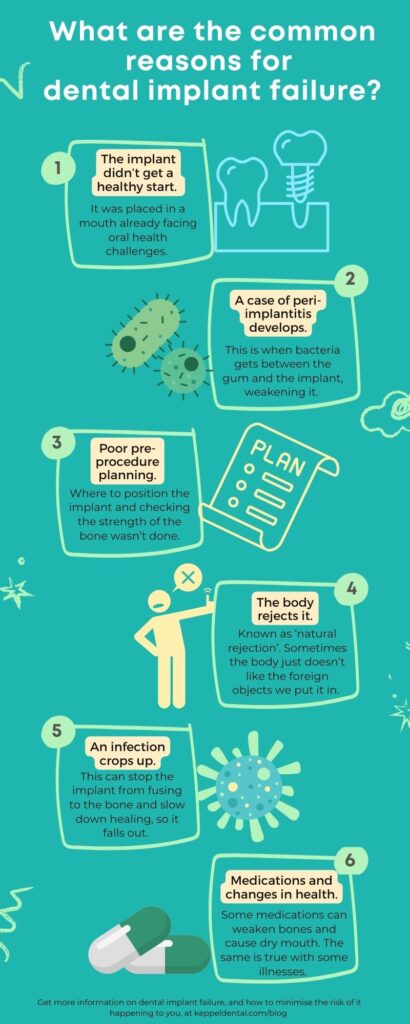
Common causes of early failure include infection at the surgical site, poor initial bone quality, surgical trauma, or premature loading before integration is complete. Patients may notice pain that worsens rather than improves, or mobility that appears within weeks of placement.
Late Failure (After Osseointegration)
Late failure occurs after the implant has successfully integrated and functioned for months or years. This typically develops from different mechanisms, including peri-implantitis, chronic overloading, or changes in the patient’s overall health.
Suggested read: Electric Gate Repair: Troubleshooting & Solutions Guide
Research published in the Journal of Dental Research indicates that peri-implantitis affects 28-56% of implant patients across various study populations, making this one of the most common causes of late failure.
Top Causes of Dental Implant Failure
Biological Factors
Failed osseointegration occurs when the bone fails to properly fuse with the implant surface. This can result from poor bone quality, contaminated implant surfaces, or excessive micromovement during healing.
Peri-implantitis is a inflammatory condition that destroys the bone supporting the implant. Similar to gum disease around natural teeth, this condition develops from bacterial plaque accumulation and can progress silently until significant bone loss occurs.
Peri-implant mucositis represents the earlier, reversible stage of inflammation affecting only the soft tissues around the implant. Without treatment, it can advance to peri-implantitis.
Patient Factors
Certain medical conditions increase failure risk. Patients with uncontrolled diabetes face higher failure rates because elevated blood sugar impairs healing and bone remodeling. Studies from the National Institute of Dental and Craniofacial Research confirm that diabetes affects osseointegration quality.
Smoking significantly constricts blood vessels in the gums, reducing oxygen and nutrient delivery to healing tissues. Clinical evidence consistently shows higher failure rates among smokers compared to non-smokers.
Osteoporosis affects bone density, potentially compromising the quality of bone available for implant anchorage. However, this condition does not automatically disqualify patients from implants when properly managed.
Inadequate oral hygiene creates an environment where harmful bacteria thrive, increasing inflammation risk around implants.
Surgical and Technical Factors
Surgical technique matters considerably. Inadequate treatment planning can lead to improper implant positioning, insufficient bone assessment, or failure to address anatomical structures like nerves or sinuses.
Nerve damage may occur from improper drilling depth or implant placement near the inferior alveolar nerve, causing chronic numbness or pain.
Sinus complications can arise when upper jaw implants breach the sinus cavity, potentially causing infection or implant displacement.
Suggested read: Dental Implant Repair: A Comprehensive Overview
Implant surface contamination during surgery or improper sterilization can trigger foreign body reactions that prevent successful integration.
Prosthetic and Mechanical Factors
Overloading occurs when biting forces exceed what the implant-bone interface can sustain. This often results from improper occlusal adjustment, parafunctional habits like teeth grinding, or poorly designed prosthetic components.
Improper loading protocols such as placing permanent crowns too soon before osseointegration completes can micromotion the implant loose.
Implant macrodesign involves the shape and thread pattern of the implant itself. Some designs suit specific bone types better than others, making proper selection important for long-term stability.
Warning Signs of Implant Problems
Recognizing early warning signs allows for faster intervention. Watch for these symptoms:
- Persistence or worsening of pain after the normal healing period
- Visible or palpable mobility of the implant or crown
- Gum inflammation, bleeding, or recession around the implant
- Difficulty chewing or discomfort when biting down
- Radiographic evidence of bone loss on dental X-rays
- Persistent bad taste or drainage from around the implant
If you notice any of these signs, schedule an evaluation with your dentist promptly. Early intervention often determines whether an implant can be saved.
Repair Solutions for Failed Dental Implants
The appropriate repair approach depends on the failure cause, severity, and timing.
Non-Surgical Interventions
For peri-implant mucositis and early-stage peri-implantitis, non-surgical treatment may suffice. This includes professional cleaning around the implant, antibiotic therapy, and improved oral hygiene protocols. Surface decontamination using specialized instruments can remove bacterial buildup without damaging the implant surface.
Surgical Repair Options
Bone grafting can restore lost bone support around failing implants. This procedure adds bone material to defects, creating a better foundation for continued implant function. Success depends on the extent of bone loss and the underlying cause of failure.
Implant surface decontamination during surgery allows direct access to clean contaminated areas and regenerate bone in select cases.
Implant removal becomes necessary when the implant cannot be salvaged. After removal, bone grafting prepares the site for future replacement, typically after a healing period of 3-6 months.
Suggested read: Walk-In Cooler Repair — A Step-by-Step Tutorial for DIY Troubleshooting and Common Fixes
Implant replacement involves placing a new implant after addressing the original failure cause. Success rates for replacement implants are comparable to initial placement when proper protocols are followed.
When Salvage Is Possible
Salvage attempts work best when failure is detected early, bone loss is limited, and the patient can commit to improved maintenance. Peri-implantitis with minor bone loss and good access for cleaning often responds well to surgical treatment.
Preventing Dental Implant Failure
Prevention remains the most effective strategy for implant longevity.
Choose an experienced provider. Look for dentists with specific implant dentistry training and a track record of successful placements. Board certification from organizations like the American Academy of Implant Dentistry indicates additional expertise.
Complete thorough pre-operative evaluation. Your dentist should assess bone quality and quantity, review medical history comprehensively, and discuss risk factors before proceeding.
Manage medical conditions. Keep diabetes well-controlled, address osteoporosis with your physician, and disclose all medications and health changes to your dental provider.
Quit smoking. If you smoke, quitting before implant surgery significantly improves healing capacity and long-term success odds.
Maintain excellent oral hygiene. Brush twice daily, floss around implants carefully, and use any recommended adjunctive tools like water flossers or interdental brushes. Visit our guide to maintaining oral hygiene with dental implants for detailed instructions.
Attend regular maintenance visits. Professional cleanings and check-ups every 6 months allow early detection of problems before they progress.
Address parafunctional habits. If you grind your teeth, discuss night guards or other protective measures with your dentist.
Frequently Asked Questions
What is the success rate for dental implants?
Dental implants have a 90-95% success rate over 5-10 years when placed by qualified professionals and properly maintained by the patient.
Suggested read: electric gate sensor repair: Electric Gate Sensor Alignment and R
What is the difference between early and late implant failure?
Early failure occurs during osseointegration, typically within the first 3-6 months, and is often caused by infection or failed bone integration. Late failure occurs after successful osseointegration and is typically linked to overload, peri-implantitis, or systemic factors.
Can a failed dental implant be saved?
Depending on the cause and severity, options range from non-surgical treatment like antibiotics and professional cleaning to surgical interventions including bone grafting and implant replacement. Early intervention significantly improves salvage chances.
Does smoking really increase implant failure risk?
Yes. Smoking constricts blood vessels, reduces healing capacity, and compromises osseointegration. Clinical studies show significantly higher failure rates among smokers compared to non-smokers.
How do I know if my dental implant is failing?
Warning signs include mobility, persistent pain, gum inflammation, recession around the implant, difficulty chewing, and bone loss visible on X-rays. Any concerning symptoms warrant immediate dental consultation.
Do medical conditions disqualify someone from getting implants?
Not necessarily. Conditions like diabetes or osteoporosis require careful management and planning but do not automatically disqualify patients. A thorough medical evaluation determines individual risk levels.
Conclusion
Dental implant failure, while concerning, is often manageable with proper diagnosis and treatment. Understanding the difference between early and late failures, recognizing warning signs, and maintaining diligent oral care all contribute to implant longevity.
If you are considering dental implants or currently have concerns about an existing implant, consult a qualified implant dentist for personalized evaluation. With appropriate planning, skilled placement, and ongoing maintenance, dental implants provide a reliable, long-lasting solution for tooth replacement.
This article is for informational purposes only and does not constitute medical advice. Consult a licensed dental professional for diagnosis and treatment recommendations specific to your situation.
Sources & References
- American Academy of Implant Dentistry. Dental Implant Statistics.
- American Dental Association. Guidelines on dental implant success criteria.
- Journal of Dental Research. Studies on peri-implantitis prevalence and treatment outcomes.
- National Institute of Dental and Craniofacial Research. Impact of systemic conditions on osseointegration.
- American Academy of Periodontology. Parameters of care for peri-implant diseases.
For a related perspective, see our modern kitchen island lighting.
Sources & References
- Source: Dental Implant Market and Success Rates – National Institute of Dental and Craniofacial Research (official)
NIDCR (part of NIH) provides research-based information on dental procedures and outcomes; their data supports general success rate statistics for dental implants. [verified topical overlap: dental, implant] - Source: Titanium Mesh with Autogenous Bone and Bovine Bone for Socket Preservation: A Retrospective Study – PubMed Central (research)
Peer-reviewed research from NIH/NLM database discussing osseointegration processes and implant success factors, supporting the osseointegration and success rate statistics. [verified topical overlap: implant]