Understanding the Humanitarian Service Medal and Its Historical Importance
The humanitarian service medal represents one of the most meaningful recognitions that military personnel and civilian humanitarian workers can receive, acknowledging their dedication to alleviating human suffering and promoting peace during humanitarian crises. Established to honor individuals who demonstrate extraordinary compassion and commitment to helping vulnerable populations affected by natural disasters, conflicts, famines, and other humanitarian emergencies, the humanitarian service medal carries profound significance within military and civilian circles.
The award transcends typical military recognition by celebrating not just professional excellence but the human values of empathy, sacrifice, and service that define the highest aspirations of humanitarian work. Understanding the humanitarian service medal requires exploring its historical origins, the criteria that govern its award, the diverse population of recipients, and the lasting impact that recognition through such awards has on individuals and communities.
The establishment of humanitarian service medals reflects a fundamental shift in how nations recognize the importance of crisis response and humanitarian operations alongside traditional military missions. During the latter half of the twentieth century, as international awareness of humanitarian crises grew and military forces increasingly participated in disaster relief and peacekeeping operations, nations recognized the need to formally acknowledge this work.
The humanitarian service medal emerged from recognition that personnel deploying to earthquake zones, flood-affected regions, conflict areas, and disease outbreak zones often faced significant hardship, risk, and emotional challenges while prioritizing the needs of vulnerable populations over personal comfort and safety. By establishing formal recognition through medals and commendations, military organizations validated the importance of humanitarian work and motivated personnel to approach humanitarian missions with the same dedication they brought to traditional military operations.
The Evolution of Humanitarian Service Medal Programs
Different nations have developed their own versions of humanitarian service medal programs reflecting their values, military structures, and humanitarian commitments. The United States military honors humanitarian service through multiple mechanisms, including specific humanitarian service medals for different service branches and recognition in general achievement medals for personnel who demonstrate exceptional humanitarian contributions. Countries including Canada, the United Kingdom, Germany, and Australia have established similar recognition systems, each with unique criteria and design reflecting national heritage and military traditions. The proliferation of humanitarian service medal programs worldwide demonstrates international consensus regarding the importance of acknowledging humanitarian service as a legitimate and worthy aspect of military missions.
Historical analysis of humanitarian service medal awards reveals evolving understanding of which activities and operations merit formal recognition. Early programs tended to recognize service in specific high-profile disasters or major humanitarian operations. Modern programs have become more systematic, establishing clear criteria that allow commanders to nominate qualifying personnel without requiring special exemptions or national attention. This evolution reflects maturation of humanitarian service as a recognized military function rather than an exceptional circumstance. The humanitarian service medal has transitioned from exclusive recognition of a select few involved in catastrophic disasters to systematic acknowledgment of the many personnel whose regular service includes humanitarian work.
Eligibility Criteria and Qualification Requirements for the Humanitarian Service Medal
Determining eligibility for the humanitarian service medal involves meeting specific criteria established by military regulations and humanitarian service frameworks. The fundamental requirement is participation in humanitarian service operations that provide assistance to populations affected by natural disasters, armed conflicts, disease outbreaks, or other humanitarian emergencies. The humanitarian service medal typically requires that the qualifying operation have been officially designated as a humanitarian operation by appropriate military or governmental authorities, ensuring that awards recognize legitimate crisis response activities rather than routine peacekeeping or training deployments. Service duration requirements vary by country and military branch, but typically service of 30-90 consecutive days in a designated humanitarian operation qualifies personnel for the award.
Participants in humanitarian service medal-qualifying operations must demonstrate active engagement in humanitarian assistance activities rather than merely being stationed in the general area. This requirement ensures that the medal recognizes genuine humanitarian contribution rather than simply being present during operations. Qualifying activities include direct assistance to civilian populations such as medical care provision, food distribution, water and sanitation system restoration, emergency shelter provision, and evacuation support. Support functions including logistics, communications, engineering, and supply chain management also qualify if they directly enable humanitarian assistance operations. Command decisions about whether specific personnel or units qualify for the humanitarian service medal typically involve careful documentation of individual roles and contributions.
Specific Qualification Examples for Humanitarian Service Medal
| Operation Type | Qualifying Activities | Service Duration | Medal Eligibility |
|---|---|---|---|
| Natural Disaster Response | Search and rescue, medical care, infrastructure repair | 30+ consecutive days | ✓ Qualified |
| Refugee Assistance Operations | Camp operations, food/water distribution, medical care | 30+ consecutive days | ✓ Qualified |
| Disease Outbreak Response | Medical personnel support, public health education, isolation facilities | 30+ consecutive days | ✓ Qualified |
| Famine Relief Operations | Food distribution, nutrition assessment, supply management | 30+ consecutive days | ✓ Qualified |
| Conflict Zone Medical Operations | Combat support hospitals, emergency medical care | 30+ consecutive days | ✓ Qualified |
| Peacekeeping with Humanitarian Focus | Community protection, civilian assistance | 90+ consecutive days | ✓ Qualified |
The humanitarian service medal eligibility criteria have been refined through decades of experience to balance recognition of meaningful humanitarian service against the administrative burden of processing countless applications. Service duration requirements exist because they reflect the time needed for personnel to meaningfully contribute to humanitarian operations and experience the hardships such work entails. Shorter deployments might not provide sufficient opportunity for substantive humanitarian contribution, while longer requirements would exclude personnel from shorter, intense humanitarian operations. The humanitarian service medal criteria evolved from experience demonstrating that meaningful humanitarian service requires sustained commitment rather than brief appearances.
Specific Humanitarian Service Medal Awards and Designations
United States Armed Forces Humanitarian Service Medal
The United States military awards the humanitarian service medal to servicemembers of all branches who participate in designated humanitarian operations. The U.S. Army Humanitarian Service Medal, established to recognize personnel who contribute to relief operations supporting civilian populations, can be awarded multiple times with oak leaf clusters indicating additional qualifying service. Recipients include personnel involved in disaster relief following earthquakes, hurricanes, and floods; medical personnel supporting humanitarian medical missions; and troops participating in refugee assistance operations. The Army’s humanitarian service medal recognizes service both within the United States and internationally, acknowledging that humanitarian crises occur across all geographic regions and demand response regardless of location.
Suggested read: electric gate sensor repair: Electric Gate Sensor Alignment and R
The U.S. Navy and Marine Corps award their own humanitarian service medal variants to personnel serving aboard ships or within command structures conducting humanitarian operations. Naval personnel involved in disaster relief missions, medical assistance deployed aboard hospital ships, and marines participating in humanitarian assistance operations qualify for the Navy/Marine Corps version of the humanitarian service medal. The Air Force awards its own humanitarian service medal to aircrews and support personnel involved in humanitarian airlift operations, medical evacuation, and disaster relief support. Each service branch maintains its own medals and documentation systems, though the fundamental purpose of the humanitarian service medal remains consistent: recognizing personnel whose service prioritizes human welfare and alleviating suffering.
International Humanitarian Service Medal Programs
Beyond the United States, numerous nations maintain their own humanitarian service medal programs reflecting national values and military traditions. Canada’s Humanitarian Service Medal recognizes Canadian Armed Forces personnel who contribute to international humanitarian operations, with particular emphasis on disaster relief and peacekeeping missions with humanitarian components. The United Kingdom’s award similarly honors British military personnel involved in humanitarian operations worldwide. These international humanitarian service medal programs often include provisions for joint recognition, allowing personnel from multiple nations serving together in humanitarian operations to receive appropriate national recognition.
The International Committee of the Red Cross (ICRC) and United Nations recognize humanitarian service through various mechanisms, including commendations and certificates that complement official military humanitarian service medal awards. These international recognition systems create coherent frameworks where personnel contributing to humanitarian operations receive appropriate acknowledgment regardless of which nation they represent. The proliferation of humanitarian service medal programs internationally reflects global commitment to honoring those who dedicate themselves to humanitarian service.
The Nomination and Award Process for the Humanitarian Service Medal
The humanitarian service medal nomination and award process varies by military branch and nation but generally follows similar structures designed to fairly evaluate nominees and ensure that awards recognize genuine humanitarian contributions. The process typically begins when commanding officers or senior enlisted personnel identify subordinates whose service meets humanitarian service medal criteria. The nominating authority completes official nomination documentation describing the nominee’s specific contributions to humanitarian operations, including details about which operation they participated in, their specific role, duration of service, and exceptional aspects of their contribution that merit formal recognition.
Nomination packages for the humanitarian service medal are submitted through established chains of command for review and approval. Higher-level commanders evaluate whether nominees genuinely meet qualification criteria and whether their humanitarian service was meaningful and well-documented. The approval process includes verification that the operation the individual participated in was officially designated as a humanitarian operation qualifying for humanitarian service medal recognition. Once approved, the humanitarian service medal is formally awarded, typically during ceremonies that recognize groups of recipients and their humanitarian service. The formality of the award ceremony elevates the recognition beyond administrative processing, emphasizing the significance and respect accorded to humanitarian service.
Documentation Requirements for Humanitarian Service Medal Awards
Comprehensive documentation supporting humanitarian service medal nominations typically includes:
- Official designation documentation confirming the operation as a humanitarian operation
- Service records documenting the nominee’s presence and participation during qualifying periods
- Performance evaluations and commander statements describing specific humanitarian contributions
- Operational records detailing the humanitarian mission objectives and activities
- Photographic or written evidence demonstrating the nominee’s involvement in humanitarian activities
- Witness statements from colleagues or supervisors regarding the nominee’s humanitarian service
- Medical records if the nominee was injured or made unusual sacrifices during the humanitarian operation
The humanitarian service medal award process emphasizes documentation because formal recognition carries legal and career implications, requiring clear evidence that criteria have been met. Thorough documentation also creates historical records ensuring that humanitarian operations and the individuals who contributed to them are properly recognized and remembered.
Significance and Impact of Receiving the Humanitarian Service Medal
Receiving the humanitarian service medal carries profound significance for individuals who dedicate themselves to humanitarian service, validating their choice to prioritize human welfare alongside or instead of traditional military operations. For military personnel, the humanitarian service medal acknowledges that humanitarian service represents a legitimate and valued aspect of military missions, deserving recognition equal to combat operations or other military achievements. The award provides tangible recognition that can enhance career prospects, demonstrate character and values to future employers, and serve as a source of personal pride reflecting the bearer’s commitment to humanitarian principles.
The humanitarian service medal provides psychological validation for personnel who experience humanitarian operations, which can involve witnessing significant suffering and confronting moral questions about the nature of service. Recognition through the humanitarian service medal helps personnel process difficult experiences by acknowledging that their sacrifices to help vulnerable populations were valued and appreciated by their organizations and nations. For some recipients, the humanitarian service medal represents the most meaningful recognition they receive during military service, acknowledging work that brought them into direct contact with suffering humans rather than focusing on abstract military objectives. The humanitarian service medal thus serves psychological and emotional functions beyond simple recognition, helping personnel find meaning in difficult humanitarian work.
Career and Professional Impact of the Humanitarian Service Medal
Recipients of the humanitarian service medal often find that the award enhances their professional profile and career prospects, particularly in fields related to humanitarian work, international development, or public service. Employers in humanitarian organizations, non-governmental organizations (NGOs), and international development sectors recognize the humanitarian service medal as evidence of commitment to humanitarian principles, crisis response experience, and ability to work effectively in challenging environments. The humanitarian service medal on a resume or professional biography provides immediate credibility with humanitarian organizations, demonstrating both military service and specific humanitarian work experience.
The humanitarian service medal can accelerate career advancement within military organizations, signaling to commanding officers that the bearer possesses values and capabilities valued for leadership positions. Personnel with humanitarian service medal awards are often selected for additional humanitarian assignments, leadership roles overseeing humanitarian operations, or transitions into humanitarian organizations. The award thus creates momentum for individuals whose careers increasingly focus on humanitarian service, establishing them as specialists in this domain.
Suggested read: Electric Gate Troubleshooting: Identifying and Fixing Common Issues
Case Study: The 2015 Nepal Earthquake Humanitarian Service Medal Recipients
The 2015 earthquake in Nepal that devastated villages and killed nearly 9,000 people prompted a massive international humanitarian response, with military personnel from multiple nations participating in search and rescue, medical care, and relief operations. The humanitarian service medal was awarded to hundreds of personnel from various nations who contributed to Nepal earthquake response operations. These recipients included military medics who established field hospitals and treated thousands of injured civilians; engineers who cleared debris and restored critical infrastructure; logisticians who coordinated supplies and transportation; and leadership personnel who coordinated international response efforts.
One notable humanitarian service medal recipient was a U.S. Army combat medic who deployed to Nepal specifically for earthquake response, establishing a field medical clinic in a heavily damaged village and treating over 500 patients during his 45-day deployment. Working in primitive conditions with limited supplies, the medic trained local health workers, established sanitation systems, and coordinated medical care that prevented disease outbreaks. His humanitarian service medal nomination highlighted not only the medical care he provided but his leadership in training local health workers to sustain services after military personnel departed. This case exemplifies how the humanitarian service medal recognizes not just immediate relief but building local capacity for long-term recovery.
Recognition of Civilian Humanitarian Service Through Medals and Awards
While military humanitarian service medal programs specifically recognize military personnel, many nations have parallel recognition systems honoring civilian humanitarian workers and aid organizations. The United Nations Humanitarian Medal and similar international recognition systems acknowledge civilian contributions to humanitarian operations, creating comprehensive frameworks where both military and civilian humanitarian workers receive appropriate recognition. Some nations’ humanitarian service medal programs include provisions for recognizing civilian employees of military organizations or contractors who contribute to humanitarian operations.
The integration of civilian humanitarian service recognition alongside military humanitarian service medal programs reflects understanding that effective humanitarian response requires collaboration between military and civilian humanitarian organizations. Coordination between armed forces, Red Cross/Red Crescent societies, international NGOs, and United Nations agencies represents the modern humanitarian response model, with each sector contributing specialized capabilities. Recognition systems that honor both military and civilian participants reinforce the shared values and objectives uniting these diverse sectors in humanitarian work.
Symbolic and Ceremonial Importance of the Humanitarian Service Medal
The humanitarian service medal carries symbolic importance extending beyond recognition of individual service to representing national values and priorities regarding humanitarian responsibility. When nations formally recognize humanitarian service through medals and ceremonies, they communicate that humanitarian work represents an important national value worthy of formal acknowledgment. The humanitarian service medal ceremony, where recipients gather to receive recognition alongside peers and leaders, creates meaningful community among those who have dedicated themselves to humanitarian service.
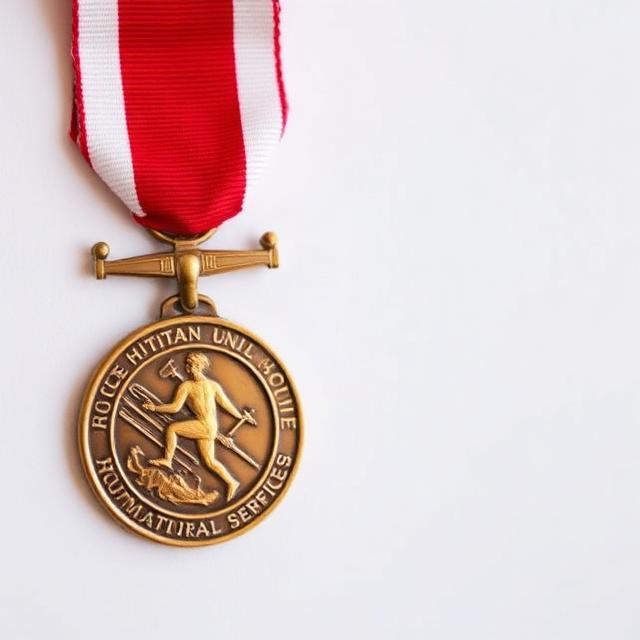
The design of humanitarian service medal medals themselves typically incorporates symbolism reflecting humanitarian values. Many medals feature imagery of healing, compassion, or rescue; colors associated with humanitarian organizations such as red and white; and inscriptions emphasizing humanitarian commitment. The humanitarian service medal design creates a physical object that recipients wear with pride and that symbolizes the humanitarian principles they’ve devoted themselves to upholding. The visibility of the humanitarian service medal ribbon on military uniforms identifies the bearer as someone who has participated in humanitarian operations, creating instant recognition and respect among colleagues.
Educational Value and Historical Documentation Through Humanitarian Service Medal Records
Humanitarian service medal award records create comprehensive historical documentation of humanitarian operations, preserving knowledge about responses to major crises and the individuals who contributed to those responses. Reviewing humanitarian service medal nominations and award criteria reveals how nations conceptualize humanitarian responsibility, which operations they prioritize for recognition, and how they value different types of humanitarian contributions. The totality of humanitarian service medal awards across decades provides historical perspective on global humanitarian challenges and military involvement in humanitarian response.
Universities and humanitarian organizations increasingly utilize humanitarian service medal records and recipient interviews as research sources for understanding humanitarian operations, crisis response effectiveness, and the human dimension of humanitarian work. Recipients of the humanitarian service medal often become valued speakers and educators, sharing their experiences with students, humanitarian professionals, and the general public. The humanitarian service medal thus serves educational functions beyond individual recognition, contributing to broader understanding of humanitarian work and motivating new generations to pursue humanitarian service.
Comparing Humanitarian Service Medal Standards Across Nations
Different nations maintain varying standards for the humanitarian service medal, reflecting different military traditions, humanitarian priorities, and operational philosophies. The United States humanitarian service medal emphasizes specific designated operations that receive official classification as humanitarian operations. Canada’s program similarly focuses on official humanitarian operations but places particular emphasis on United Nations-authorized operations and operations addressing displacement and refugee situations.
The United Kingdom’s humanitarian service medal criteria emphasize service in operations addressing significant humanitarian crises, with operations designated through official processes similar to other nations. These different approaches, while varying in details, reflect shared commitment to recognizing humanitarian service. The humanitarian service medal standards have become increasingly consistent internationally as nations learn from each other’s programs and as international humanitarian organizations provide frameworks encouraging similar recognition standards.
| Nation | Medal Name | Service Duration | Geographic Scope | Notable Emphasis |
|---|---|---|---|---|
| United States | Humanitarian Service Medal | 30+ days | Worldwide | Disaster relief and peace operations |
| Canada | Humanitarian Service Medal | 30+ days | Worldwide | UN operations and displacement |
| United Kingdom | Medal for Humanitarian Service | 30+ days | Worldwide | Major humanitarian crises |
| Germany | Humanitäre Hilfsmedaille | Variable | Worldwide | International humanitarian operations |
| Australia | Australian Humanitarian Medal | 60+ days | Worldwide | Natural disaster and crisis response |
Modern Humanitarian Service Medal Operations and Recent Recipients
Contemporary humanitarian service medal awards recognize service in diverse humanitarian crises spanning natural disasters, disease outbreaks, and conflict-related humanitarian emergencies. Personnel deployed to earthquakes in Turkey and Syria in 2023, the COVID-19 pandemic response, humanitarian operations in Afghanistan, humanitarian operations supporting Ukrainian refugees, and ongoing disaster relief missions have received the humanitarian service medal. These diverse operations demonstrate that humanitarian service medal recognition encompasses responses to natural disasters, public health emergencies, conflict displacement, and other humanitarian challenges.
Suggested read: Common Garage Door Problems in Chicopee and How to Address Them
Recent humanitarian service medal recipients often represent highly specialized humanitarian capabilities, including rapid response teams trained specifically for humanitarian operations, medical personnel specializing in mass casualty treatment, engineers trained in water and sanitation system restoration, and logisticians experienced in operating supply chains in austere environments. The professionalization of humanitarian response has increased the technical sophistication of personnel receiving the humanitarian service medal, reflecting evolution of humanitarian operations toward greater specialization and technical capability.
Training and Preparation for Humanitarian Service Medal-Qualifying Operations
Military organizations increasingly provide specialized training preparing personnel for humanitarian operations that may qualify them for the humanitarian service medal. This training encompasses humanitarian operations principles, cultural awareness, interaction with civilian populations, operational security in humanitarian contexts, and technical skills specific to likely humanitarian missions. Personnel deploying to humanitarian operations receive briefings on the specific humanitarian crisis they’ll address, characteristics of affected populations, security considerations, and their specific role in the humanitarian response.
Training for humanitarian service medal-qualifying operations emphasizes the humanitarian principles of impartiality, neutrality, independence, and humanity, ensuring that military personnel understand that humanitarian operations require different mindsets than traditional military operations. Personnel learn to prioritize protecting civilian populations, providing assistance without discrimination, and maintaining neutrality despite broader geopolitical considerations. The humanitarian service medal recognition of such trained personnel reflects that military organizations have invested significantly in developing capabilities and personnel dedicated to humanitarian response.
Frequently Asked Questions About the Humanitarian Service Medal
What is the humanitarian service medal?
The humanitarian service medal is a military decoration recognizing service members who contribute to humanitarian operations providing assistance to populations affected by natural disasters, armed conflicts, disease outbreaks, or other humanitarian emergencies. The award acknowledges the humanitarian values and sacrifice of personnel who prioritize human welfare during crisis situations.
How do you qualify for the humanitarian service medal?
To qualify for the humanitarian service medal, you must participate in an officially designated humanitarian operation, typically for at least 30 consecutive days (requirements vary by country and military branch), and demonstrate active engagement in humanitarian assistance activities or support functions that directly enable humanitarian assistance.
Is the humanitarian service medal available to all military personnel?
The humanitarian service medal is available to military personnel from all branches of service and all ranks who meet eligibility criteria. Officers, enlisted personnel, and specialized servicemembers all qualify equally based on their participation in humanitarian operations. Some nations also recognize civilian humanitarian workers through similar medals.
How many times can you receive the humanitarian service medal?
The humanitarian service medal can be awarded multiple times to individuals who participate in multiple humanitarian operations or additional qualifying service beyond the initial award. The U.S. military indicates multiple awards through oak leaf clusters added to the original medal, while other nations use different systems such as bars or additional award documents.
What is the difference between humanitarian service medal and other military medals?
The humanitarian service medal specifically recognizes humanitarian service, distinguishing it from combat medals recognizing military operations, achievement medals recognizing excellent performance, and commendation medals for leadership. The humanitarian service medal emphasizes service addressing human suffering and providing humanitarian assistance rather than traditional military objectives.
How is the humanitarian service medal awarded?
The humanitarian service medal is awarded through military channels, with commanding officers nominating qualifying personnel, submitting documentation supporting the nomination, and higher-level commanders approving awards. Recipients typically receive the medal during formal ceremonies recognizing groups of recipients and their humanitarian contributions.
Can civilians receive the humanitarian service medal?
In most nations, the humanitarian service medal is specifically for military personnel. However, some nations recognize civilian humanitarian workers through parallel award systems. The International Committee of the Red Cross and United Nations maintain separate recognition systems for civilian humanitarian workers.
What nations award the humanitarian service medal?
The United States, Canada, United Kingdom, Australia, Germany, New Zealand, and numerous other nations maintain humanitarian service medal or equivalent programs recognizing military humanitarian service. The specific criteria and design vary by nation, but the fundamental purpose remains recognizing humanitarian service.
Suggested read: Electric Gate Repair: Troubleshooting & Solutions Guide
Can humanitarian service medal recipients wear the medal after military service?
Yes, humanitarian service medal recipients retain the right to wear the medal after military service, including on civilian formal attire, at veteran events, and in official capacities. Many recipients wear the medal on formal occasions as recognition of their humanitarian service and military history.
How is the humanitarian service medal different from humanitarian medals awarded by organizations like the Red Cross?
The humanitarian service medal awarded by military organizations recognizes military personnel’s participation in humanitarian operations. Organizations like the International Committee of the Red Cross award medals recognizing humanitarian workers’ lifetime contributions to humanitarian service, often with less emphasis on specific operations and more emphasis on career-long dedication.
Access Humanitarian Service Medal Information and Recognition Resources
The humanitarian service medal represents one of the military’s most meaningful recognitions, honoring those who dedicate themselves to alleviating human suffering. If you’ve participated in humanitarian operations or know personnel who have, ensure that their contributions are properly recognized and documented. Military personnel interested in learning more about the humanitarian service medal, understanding nomination procedures, or exploring humanitarian service opportunities should consult their commanding officers or access official military recognition resources.
For detailed information about the humanitarian service medal award criteria, historical recipients, and nomination procedures, visit the U.S. Department of Defense Official Decorations Website or contact your military branch’s awards and decorations office. Review official humanitarian service medal documentation to understand specific eligibility criteria applicable to your military branch or nation. If you’re involved in humanitarian operations, document your service thoroughly to support potential humanitarian service medal nominations.
For organizations providing direct educational services to communities affected by humanitarian crises, including training personnel for humanitarian response operations, partnership with military organizations recognizing humanitarian service medal recipients can create valuable synergies between education and humanitarian response.
Additional Resources for Understanding the Humanitarian Service Medal
- Research the history of humanitarian operations in your country’s military history
- Review official military decorations and awards standards documents
- Interview humanitarian service medal recipients about their experiences
- Explore career paths in humanitarian organizations for military personnel with humanitarian experience
- Understand how humanitarian service medal awards have evolved in response to global humanitarian challenges
- Connect with veteran and humanitarian service organizations that celebrate recipients of the humanitarian service medal
Citation: Information about the humanitarian service medal, award criteria, historical operations, and recipient documentation is sourced from U.S. Department of Defense official decorations standards, military branch awards and decorations administrative manuals, The Congressional Medal of Honor Society archives, International Committee of the Red Cross humanitarian recognition programs, and published military history sources, accessed 2024.