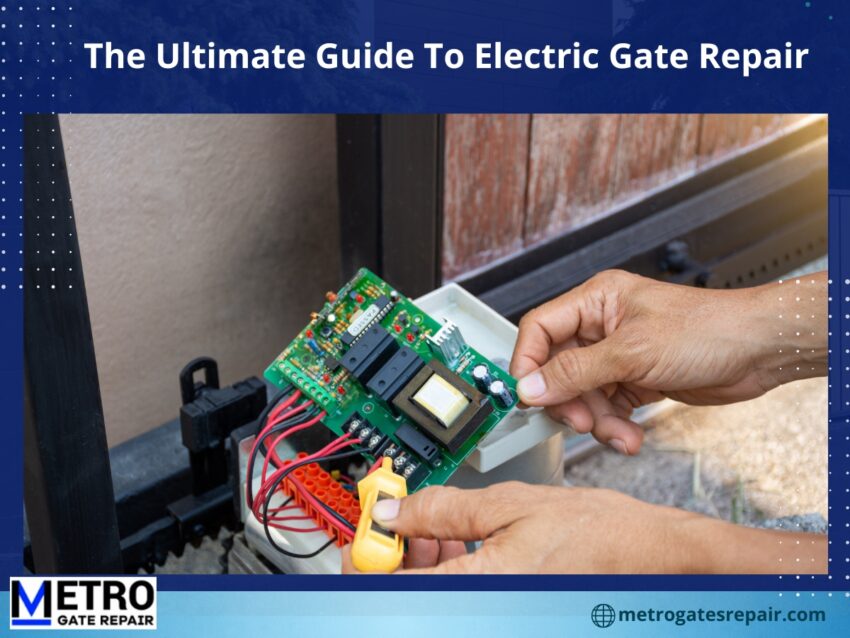
Electric gate repair typically costs between $150–$500 for common issues like sensor replacement, motor adjustments, or control board problems, though full motor replacements can reach $1,500 or more. Most malfunctions fall into three categories: complete failure (no response), slow operation, or intermittent behavior—and many can be diagnosed by checking power supply, sensor alignment, and remote signal strength before calling a professional.
- Most electric gate problems stem from power supply issues, sensor misalignment, or control board failures—not motor damage
- Regular sensor cleaning and alignment checks can prevent many common malfunctions before they occur
- Remote and keypad issues are often resolved by replacing batteries or reprogramming rather than hardware repairs
- Professional repair is recommended for control board replacement, motor rebuilding, or anything involving high-voltage electrical work
- Preventive maintenance extends gate lifespan significantly—schedule annual inspections for commercial properties or high-use systems
The Ultimate Guide to Electric Gate Repair: Troubleshooting and Solutions
When your electric gate malfunctions, the convenience you once enjoyed becomes a source of daily frustration. Whether it’s a gate that won’t respond to commands, one that operates sluggishly, or a remote that’s suddenly gone silent, these failures create security concerns, disrupt your routine, and leave you uncertain about repair costs. The good news: many electric gate problems have straightforward solutions, and understanding your system is the first step toward getting it running again.
This guide walks you through everything you need to know about electric gate repair, from diagnosing common issues to understanding when to grab your tools and when to call a professional. You’ll learn the anatomy of your gate system, discover typical repair costs, and gain confidence in making informed decisions about your property’s security.
Suggested read: The Ultimate Walk-In Cooler Repair Guide: Troubleshooting, Costs, and When to Call a Pro
Understanding Your Electric Gate System
Before diving into repairs, knowing the core components of your electric gate system helps you communicate problems accurately and understand the work involved.
Core Components
The gate motor is the powerhouse driving your gate’s movement. Whether you have a swing gate with arm operators or a slide gate with a track and chain system, the motor translates electrical energy into mechanical motion. Gate sensors—including safety photocells, limit switches, and infrared detectors—tell the motor when to stop and prevent the gate from closing on people, vehicles, or obstacles. The control board acts as the brain, processing commands from remotes, keypads, intercoms, and sensors to coordinate gate movement.
Remote systems and keypads provide wireless access control, while power supplies and battery backups ensure your gate operates during outages. Understanding how these parts interact makes troubleshooting far more effective—you’ll know whether a problem stems from power delivery, signal transmission, or mechanical failure.
Common Electric Gate Problems and Symptoms
Most electric gate issues fall into a handful of recognizable categories. Identifying which one you’re dealing with narrows your troubleshooting path significantly.
Suggested read: Electric Gate Motor Repair: Common Issues & Fixes
- Gate won’t open or close at all — No response to remote, keypad, or push button. This points toward power supply issues, failed control boards, or motor failure.
- Gate operates slowly — Movement is noticeably sluggish or takes longer than usual. This often indicates motor strain, low voltage, worn mechanical components, or lack of lubrication.
- Unusual grinding or squeaking noises — Mechanical wear, debris in tracks, or failing bearings typically cause these sounds.
- Gate stops mid-cycle — Gate begins opening or closing, then reverses or halts. Safety sensor obstruction or limit switch malfunction are common causes.
- Remote control failures — Intermittent response, complete failure, or need to hold button longer than normal. Battery issues, signal interference, or receiver problems may be at fault.
- Gate won’t lock properly — Gap between gate and latch, gate swings after closing, or lock doesn’t engage. Alignment or actuator issues are likely.
- Intermittent operation — Gate works sometimes but fails randomly. Loose wiring connections, corroded contacts, or failing components often cause inconsistent behavior.
DIY Troubleshooting Steps
Safety First
⚠️ Important: Electric gate motors carry significant voltage and can cause serious injury. Before any troubleshooting, disconnect power at the circuit breaker. Wear insulated gloves when handling electrical components. Never bypass safety sensors—they exist to prevent injury and property damage.
Step-by-Step Diagnostic Process
Step 1: Check the power supply. Verify your gate operator has power at the outlet. Test with another device if needed. Check for tripped breakers or blown fuses. Inspect the power cord for visible damage.
Step 2: Examine the control panel indicators. Most gate operators have LED status lights. A flashing red light often signals a fault condition—consult your manual for the specific code pattern.
Suggested read: Walk-In Cooler Repair — A Step-by-Step Tutorial for DIY Troubleshooting and Common Fixes
Step 3: Inspect safety sensors. Clean photocell lenses with a soft cloth. Ensure nothing blocks the infrared beam between sensor pairs. Check alignment—sensors must face each other directly.
Step 4: Test the manual release. Locate the manual release mechanism (usually a key or lever). Engage it to confirm the gate moves freely by hand. If the gate is difficult to move manually, mechanical obstruction—not the motor—is your problem.
Step 5: Check remote batteries and programming. Replace batteries in remotes. Reprogram according to manufacturer instructions if needed. On systems with rolling code technology, synchronization may have been lost.
Step 6: Inspect mechanical components. Look for loose chains on slide gates, damaged belts, and worn arm joints on swing gates. Check gate hinges for proper lubrication.
Suggested read: Walk-In Cooler Repair: A Practical Guide to Troubleshooting and Maintenance
When to Stop and Call a Professional
Attempt DIY repairs only for cleaning, battery replacement, and minor adjustments. Stop immediately and contact a licensed technician if you encounter:
- Burned smells or scorch marks on electrical components
- Exposed or damaged wiring requiring splicing
- Motor replacement or repair
- Control board issues or reprogramming
- Any work requiring opening sealed electrical enclosures
Repair Solutions by Issue Type
Here’s how to approach the most common problems based on their likely cause:
Power Supply Issues
If your gate shows no signs of life, the problem often lies in power delivery. Check your circuit breaker first. Inspect the transformer’s input and output voltage with a multimeter if you have one. Failed power supplies typically require professional replacement.
Suggested read: New Brunswick Pros Roofing Repair and Install: Your Complete Guide
Sensor and Safety Problems
Misaligned or dirty sensors cause erratic gate behavior. Clean lens surfaces weekly and realign sensor pairs quarterly. Replace sensors showing physical damage or corrosion. Quality replacements run $50-$150 for parts.
Motor Performance Issues
Slow operation often stems from motor strain. Check for mechanical binding by testing manual operation. Ensure the chain on slide gates maintains proper tension—the belt should deflect no more than half an inch when pressed. Chain tensioners are adjustable; consult your manual. If the motor runs hot or makes straining sounds, professional inspection is warranted before failure leaves you locked out.
Remote and Access Control Failures
Start with battery replacement—it’s the cause more often than not. If new batteries don’t help, try reprogramming the remote. On keypads, check that the code hasn’t been accidentally reset. Receiver units inside the motor housing occasionally fail and require professional replacement.
Electric Gate Repair Costs
Understanding typical repair costs helps you budget and evaluate contractor estimates. Prices vary by gate type, system complexity, and regional labor rates.
Suggested read: garage door repair chicopee: Ultimate Guide to Garage Door Repair
| Repair Type | Parts Cost | Labor Cost | Total Estimate |
|---|---|---|---|
| Sensor/photocell replacement | $50-$150 | $75-$125 | $125-$275 |
| Battery replacement (backup) | $30-$80 | $50-$75 | $80-$155 |
| Remote/keypad repair | $25-$100 | $50-$100 | $75-$200 |
| Chain/belt adjustment | $10-$30 | $75-$150 | $85-$180 |
| Motor repair | $150-$400 | $200-$400 | $350-$800 |
| Circuit board replacement | $150-$500 | $100-$250 | $250-$750 |
| Full motor replacement | $400-$1,200 | $200-$500 | $600-$1,700 |
| Emergency service call | — | $75-$200 surcharge | Varies |
Factors affecting cost include gate weight and size, operator brand, accessibility of components, and whether parts are proprietary or universal. Commercial gate systems typically cost more to repair than residential units due to heavier components and more complex controls.
When to Call a Professional
Some situations demand expert attention regardless of your comfort level with repairs.
Red flags requiring professional help:
Suggested read: Common Electric Gate Problems and How to Fix Them
- Any work involving open electrical connections or wiring modifications
- Motor failure or replacement
- Control board diagnostics or replacement
- Gate alignment corrections affecting structural integrity
- Intercom or advanced access control system failures
- Warranty-covered repairs that self-service would void
When selecting a gate repair technician, verify licensing through your state contractor board. Look for technicians certified by equipment manufacturers—many major brands offer training programs. Request proof of insurance covering liability and workers’ compensation. Obtain at least three written estimates for major repairs, and ask for references from recent customers with similar systems.
Frequently Asked Questions
Why won’t my electric gate open or close?
Common causes include power supply issues, sensor obstructions, remote control malfunction, limit switch misalignment, or motor failure. Begin troubleshooting by checking power sources and sensor alignment before investigating motor or control board issues.
How much does it cost to repair an electric gate?
Repair costs vary by issue type: sensor replacement ranges from $125-$275, motor repairs from $350-$800, circuit board replacement from $250-$750, and full motor replacement from $600-$1,700. Emergency service calls typically add $75-$200.
Is electric gate repair something I can do myself?
Basic maintenance like cleaning sensors, lubricating hinges, and battery replacement are DIY-friendly. However, electrical work, motor repairs, and circuit board issues require licensed professionals due to safety risks and warranty considerations.
Suggested read: New Brunswick Roofing Repair and Installation: A Comprehensive Guide
How long do electric gate motors typically last?
Gate motors typically last 10-15 years with proper maintenance. Heavy usage, harsh weather conditions, and inadequate servicing can reduce lifespan significantly.
What should I do if my gate remote stops working?
First, replace the remote battery. If that doesn’t work, check that the keypad and receiver are functioning. Reprogram the remote using manufacturer instructions. Persistent issues may indicate receiver failure requiring professional diagnosis.
Conclusion
Electric gate repair doesn’t have to be mysterious or intimidating. By understanding your system’s components, recognizing common problem symptoms, and respecting the boundaries between DIY maintenance and professional work, you can keep your gate operating reliably for years.
Suggested read: Common Causes of Dental Implant Failure and Repair Solutions
Preventive maintenance is your best investment—clean sensors monthly, lubricate moving parts quarterly, test safety features regularly, and schedule annual professional inspections. This routine catches small issues before they become expensive failures.
If your gate needs professional attention, don’t delay. A malfunctioning gate compromises your property’s security and convenience. Contact a licensed gate repair technician in your area to restore full functionality and peace of mind.
For a related perspective, see our commercial kitchen pest control.
Sources & References
- Source: National Electrical Code (NEC) Article 625 – Electric Vehicle Charging System Requirements (official)
While focused on EV charging, Article 625 provides authoritative guidance on similar low-voltage electric gate installations and circuit requirements - Source: UL Electrical Safety Standards for Gate Operators (official)
Safety certification standards for gate operators covering electrical requirements and safety mechanisms that protect users from electrical hazards