 When patients experience service failures in healthcare settings, the response from staff can either escalate the situation into a full-blown crisis or transform it into an opportunity to strengthen relationships and build lasting loyalty. This is where the SALUTE service recovery model becomes an invaluable framework for healthcare organizations seeking to deliver exceptional patient experiences even when things go wrong. Developed and implemented by the Veterans Affairs (VA) healthcare system, this structured approach has revolutionized how healthcare professionals handle service recovery, turning potentially negative encounters into positive outcomes that reinforce patient trust and satisfaction.
The healthcare industry faces unique challenges when it comes to customer service. Unlike traditional retail or hospitality sectors, healthcare service failures can have serious implications for patient health, safety, and wellbeing. When a patient feels their concerns aren’t being heard, when appointments are missed, when communication breaks down, or when expectations aren’t met, the consequences extend far beyond simple dissatisfaction. These moments require immediate, empathetic, and effective intervention. The service recovery SALUTE model provides healthcare workers with a clear, actionable framework to navigate these challenging situations with confidence and competence.
Understanding the SALUTE Model for Service Recovery
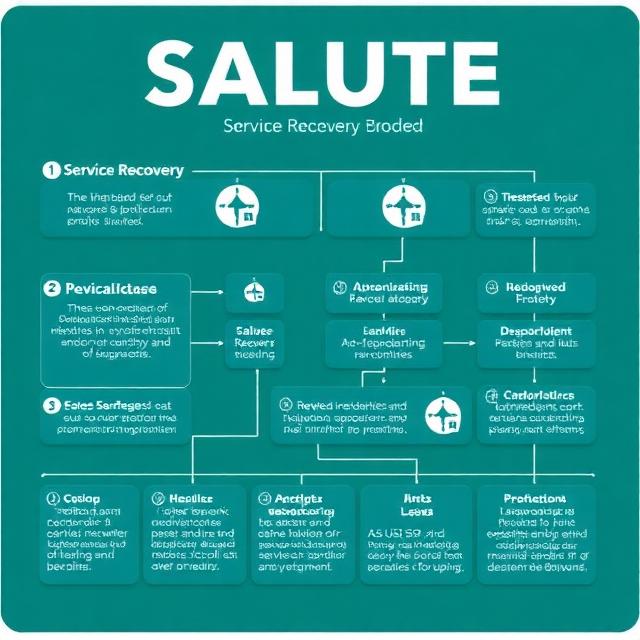
The SALUTE service recovery model emphasizes six key actions—saying hello, apologizing, listening, understanding, taking action, and expressing gratitude—which serve as a comprehensive framework for addressing patient grievances and service failures. This systematic approach ensures that every healthcare employee, regardless of their role or experience level, can effectively manage service recovery situations in a way that maintains dignity, demonstrates empathy, and restores trust in the patient-provider relationship.
What makes the SALUTE recovery model particularly powerful is its simplicity and universality. The framework doesn’t require extensive training to understand, yet it provides enough structure to guide staff through emotionally charged situations. Each component of the model builds upon the previous one, creating a natural flow that moves from acknowledgment to resolution to relationship repair. This sequential approach ensures that no critical step is missed when responding to patient concerns.
The Six Components of the SALUTE Service Recovery Framework
Let’s examine each element of the SALUTE model service recovery approach in detail, exploring how these components work together to create effective service recovery outcomes:
1. S – Saying Hello (Initial Engagement and Recognition)
The first step in the SALUTE framework involves making immediate contact with the dissatisfied patient or family member. This isn’t just a perfunctory greeting—it’s a deliberate act of recognition that communicates “I see you, I acknowledge your presence, and I’m ready to help.” When a patient is frustrated or upset, they often feel invisible or ignored by the healthcare system. By proactively saying hello and initiating contact, staff members signal their willingness to engage and their commitment to addressing the concern. This initial greeting sets the tone for the entire interaction and can significantly de-escalate tension before diving into the specifics of the complaint.
In practice, saying hello might involve making eye contact, using the patient’s name, introducing yourself and your role, and using open body language that conveys approachability. For example, a nurse might approach a visibly frustrated patient in the waiting room and say, “Hello, Mr. Johnson. My name is Sarah, and I’m one of the nurses here. I notice you’ve been waiting quite a while. I’d like to hear about your experience today.” This simple act of recognition can immediately lower defenses and create space for productive dialogue.
2. A – Apologizing (Taking Ownership Without Excuses)
Acknowledging mistakes without placing blame or making excuses is a fundamental principle of service recovery. The apology component of the SALUTE service recovery approach requires staff to express genuine regret for the patient’s negative experience, regardless of whether the issue was directly caused by that individual staff member or by systemic factors beyond their control. This is often the most challenging step for healthcare workers, particularly in an environment where medical liability concerns can make apologies feel risky.
Suggested read: Unity Service Recovery: Restoring Operations and Customer Trust After Service Failures
However, research consistently shows that sincere apologies are powerful tools for rebuilding trust and preventing escalation. The key is to apologize for the experience and the impact on the patient, not necessarily for specific actions that might imply fault. For instance, rather than saying “I’m sorry we made a mistake with your appointment,” a staff member might say “I’m sincerely sorry that you’ve had to wait so long and that this experience hasn’t met your expectations. I can imagine how frustrating this must be for you.”
The apology should be delivered with empathy and without defensive language. Phrases like “but,” “however,” or “the reason was” immediately undermine the apology by shifting into justification mode. A genuine apology acknowledges the patient’s feelings and validates their right to be upset without making excuses or deflecting responsibility.
3. L – Listening (Active and Empathetic Engagement)
Listening is emphasized as a key action within the SALUTE model, and this goes far beyond simply hearing words. Active listening in the context of service recovery involves giving the patient your full, undivided attention, avoiding interruptions, and demonstrating through both verbal and non-verbal cues that you’re fully engaged with their concerns. Patients who feel genuinely heard are significantly more likely to feel satisfied with the resolution process, even if the outcome isn’t exactly what they initially wanted.
Effective listening in service recovery situations requires healthcare workers to temporarily set aside their own defensive reactions, their desire to explain or justify, and their impulse to immediately jump to solutions. Instead, they should focus entirely on understanding the patient’s perspective, feelings, and needs. This might involve asking clarifying questions, paraphrasing what you’ve heard to ensure understanding, and allowing silence when the patient needs time to collect their thoughts or express emotions.
Non-verbal listening behaviors are equally important. Maintaining appropriate eye contact, nodding to show understanding, leaning slightly forward to demonstrate engagement, and avoiding distracting behaviors like checking phones or looking around the room all communicate that the patient has your full attention. In situations where face-to-face interaction isn’t possible, such as phone conversations, verbal acknowledgments like “I understand,” “I hear you,” and “That must have been really difficult” serve the same purpose.
4. U – Understanding (Demonstrating Comprehension and Empathy)
Understanding goes beyond simply hearing the patient’s words—it involves demonstrating that you truly comprehend the impact of the service failure on their life, health, and wellbeing. This step in the SALUTE healthcare recovery model requires staff to explicitly articulate their understanding of the patient’s concerns and the reasons why the patient feels the way they do. This validation is crucial because it confirms that the listening was genuine and that the patient’s perspective has been accurately received.
Understanding also involves recognizing the broader context of the patient’s experience. A missed appointment isn’t just an administrative inconvenience—it might mean lost wages from taking time off work, difficulty arranging childcare or transportation, anxiety about delayed medical care, or frustration with a healthcare system that feels impersonal and inefficient. By acknowledging these wider implications, staff members show that they see patients as whole people with complex lives, not just as case numbers or appointment slots.
Demonstrating understanding might sound like: “I understand that you took time off work for this appointment and arranged for someone to watch your children, and now you’re being told you’ll need to reschedule. That’s not just inconvenient—it creates real problems for your life and delays the care you need. I completely understand why you’re frustrated and disappointed.”
5. T – Taking Action (Implementing Solutions and Following Through)
Suggested read: Roof Coating Services: Transform and Protect Your Commercial Property Investment
The SALUTE training model empowers staff to provide prompt service recovery when errors occur, correcting what went wrong for the patient, mending the damage the error caused, and restoring trust in the relationship. The action step is where the service recovery framework moves from empathy and acknowledgment into concrete problem-solving. This component requires staff to work with the patient to identify appropriate solutions and then follow through on those commitments quickly and effectively.
Taking action might involve a range of responses depending on the nature of the service failure. This could include expediting an appointment, connecting the patient with a supervisor or specialist who can address their specific concern, providing additional resources or information, making changes to their care plan, or implementing system-level improvements to prevent similar issues in the future. The key is that the action should be meaningful, timely, and directly responsive to the patient’s needs.
Importantly, staff should involve patients in determining what action would be most helpful. Rather than assuming you know what the patient wants, ask questions like “What would help make this right for you?” or “What outcome would you like to see from this conversation?” This collaborative approach respects patient autonomy and ensures that the resolution truly addresses their needs rather than just checking a box for service recovery.
When immediate resolution isn’t possible, taking action includes clearly communicating the next steps, providing realistic timelines, and following up to ensure promises are kept. For example, if a staff member needs to investigate an issue with patient records, they should explain exactly what will happen, when the patient can expect an update, and who will be responsible for following up.
6. E – Expressing Gratitude (Closing With Appreciation)
The final component of the SALUTE service recovery process involves thanking the patient for bringing the issue to your attention and for giving the organization an opportunity to make things right. Expressing gratitude is the final step in the SALUTE framework, and it serves multiple important functions. First, it reframes the complaint as valuable feedback rather than as an attack or inconvenience. Second, it reinforces the patient’s decision to voice their concerns rather than simply leaving the healthcare system. Third, it ends the interaction on a positive note, leaving the patient feeling respected and valued.
Expressing gratitude should feel genuine and specific. Rather than a generic “thank you for your feedback,” consider more personal expressions like “Thank you for taking the time to explain this to me. Your feedback helps us identify where we can improve, and I’m grateful you gave us the chance to make this right for you.” This kind of specific appreciation reinforces that the patient’s voice matters and that their willingness to engage in the resolution process is valued.
Gratitude also extends to acknowledging the patient’s patience, understanding, or willingness to work with you on a solution. Even in situations where the patient has been angry or demanding, finding something genuine to thank them for helps rebuild the relationship and reinforces positive aspects of the interaction.
Implementing the SALUTE Recovery Model in Healthcare Settings
Successfully implementing the service recovery model SALUTE requires more than just teaching staff the six-step framework. Organizations must create a culture that empowers frontline workers to make decisions, provides them with the resources they need to resolve issues, and supports them when they take ownership of service recovery situations.
Training and Education Programs
A two-month pilot program was conducted with 41 staff members who volunteered to participate in twice-weekly Microsoft Teams training sessions. Effective training programs for the SALUTE model typically include several key components:
Suggested read: Understanding GC Services: What You Need to Know About Debt Collection and Recovery
Interactive Learning Sessions: Rather than passive lectures, effective training incorporates role-playing scenarios where staff practice applying each component of the SALUTE framework to realistic service failure situations. These practice sessions allow staff to develop confidence and muscle memory for the model before they encounter real patient concerns.
Case Study Analysis: Training should include analysis of both successful and unsuccessful service recovery interactions, helping staff identify what works and what doesn’t. Real examples from within the organization are particularly valuable, as they demonstrate that service failures are normal and that the SALUTE model provides an effective path forward.
Continuous Feedback and Refinement: Participant feedback was collected using an anonymous post-survey and analyzed continuously to refine and adjust the training content. This iterative approach ensures that training remains relevant and addresses the specific challenges staff encounter in their daily work.
Leadership Modeling: Leaders and supervisors must consistently model SALUTE behaviors in their own interactions, both with patients and with staff members. When employees see their managers apologizing for mistakes, listening actively to concerns, and taking ownership of solutions, they’re more likely to adopt these behaviors themselves.
Measuring Success and Impact
Organizations implementing the SALUTE patient recovery model need robust metrics to assess effectiveness and identify areas for improvement. Key performance indicators might include:
Patient Satisfaction Scores: VA’s trust has improved from 47% to 79% over the past six years, demonstrating the powerful impact of systematic service recovery approaches. Tracking patient satisfaction before and after SALUTE implementation provides clear evidence of the model’s effectiveness.
Complaint Resolution Times: Measuring how quickly service failures are addressed and resolved after staff are trained in the SALUTE model can demonstrate increased efficiency in handling patient concerns.
Staff Confidence and Empowerment: Participants reported increased confidence and empowerment in handling service issues effectively following SALUTE training. Surveying staff about their comfort level with service recovery situations can reveal whether the training is building the skills and confidence needed for effective implementation.
Repeat Complaints and Escalations: When service recovery is handled well, patients are less likely to file formal complaints or escalate issues to supervisors or external regulators. Tracking these metrics can demonstrate the SALUTE model’s effectiveness at resolving concerns at the point of contact.
Real-World Applications and Case Studies
The SALUTE approach to service recovery has been successfully implemented across numerous healthcare settings with measurable results. Understanding how different organizations have adapted and applied the model provides valuable insights for implementation.
VA Healthcare System Success Story
The VA New England Healthcare System developed a standardized service recovery program to improve patient satisfaction, increase customer loyalty, and build patient trust. The implementation of SALUTE across the VA system represents one of the largest-scale deployments of a standardized service recovery model in healthcare. Over the past several years, VEO and VHA have worked tirelessly to train all VHA employees (almost 400,000 individuals) on the VA Way, which includes the SALUTE framework.
Suggested read: Central Referral Service: Streamlining Healthcare Access and Patient Care Coordination
The results have been remarkable. With the latest Hospital Consumer Assessment of Healthcare Providers & Systems (HCAHPS) patient experience scores from the Centers for Medicare & Medicaid Services (CMS), it is clear that VA is not only the best in the country at providing an excellent patient experience, but we are also outpacing the private sector. This success demonstrates that the SALUTE model can drive significant improvements in patient satisfaction even when implemented at massive scale across diverse healthcare settings.
Common Service Recovery Scenarios
The SALUTE model for service recovery can be applied to virtually any service failure situation in healthcare. Here are some common scenarios where the framework proves particularly valuable:
| Service Failure Type | SALUTE Application | Expected Outcome |
|---|---|---|
| Long Wait Times | Say hello immediately upon recognizing wait, apologize for delay, listen to impact on patient’s schedule, understand broader consequences, take action to expedite or reschedule, express gratitude for patience | Reduced frustration, maintained relationship despite inconvenience |
| Billing Errors | Greet patient with acknowledgment of issue, apologize for confusion and stress, listen to specific concerns about charges, understand financial impact, take action to correct billing and prevent future errors, thank patient for bringing issue to attention | Financial resolution, restored trust in administrative processes |
| Communication Breakdown | Initiate contact proactively, apologize for miscommunication, listen to what patient understood vs. what was intended, understand confusion and anxiety caused, take action to clarify and improve communication systems, express appreciation for feedback | Improved clarity, better patient engagement in care |
| Medication Errors | Immediate engagement with patient and family, sincere apology for error, careful listening to concerns about safety and trust, deep understanding of fear and anxiety, immediate corrective action plus prevention measures, gratitude for patient’s willingness to continue care | Safety improvement, maintained therapeutic relationship despite serious error |
| Appointment Scheduling Issues | Greeting and acknowledgment of inconvenience, apology for system failures, listening to impact on patient’s life and health needs, understanding urgency and external constraints, action to find alternative appointment times or providers, thanks for flexibility | Successful scheduling resolution, loyalty despite initial failure |
Integrating SALUTE With Broader Patient Experience Strategies
While the SALUTE service recovery technique is powerful on its own, it’s most effective when integrated into a comprehensive patient experience strategy. The VA system, for example, uses SALUTE alongside their WECARE framework (Welcome, Explain your role, Connect with the Veteran, Actively listen, Respond to the need, Express gratitude) to create a complete approach to patient interaction.
Proactive vs. Reactive Service Recovery
Organizations should view the SALUTE recovery framework as part of a continuum of patient experience efforts. Principles of Service Recovery include anticipating and correcting problems before they occur, which means that the best service recovery is preventing service failures in the first place.
Proactive Strategies:
- Regular staff training on communication and empathy skills
- Systems designed to minimize common failure points (appointment reminders, clear signage, streamlined processes)
- Patient feedback mechanisms that identify emerging issues before they become widespread problems
- Leadership rounds and direct patient engagement to understand experience in real-time
- Data analytics to predict potential service failures (appointment no-shows, communication gaps, high-risk transitions)
Reactive Strategies:
- SALUTE model for addressing service failures when they occur
- Formal complaint resolution processes with clear escalation pathways
- Root cause analysis to understand system-level causes of recurring issues
- Patient advocacy programs that provide additional support for complex concerns
- Follow-up systems to ensure solutions are implemented and effective
Cultural Transformation
Implementing the SALUTE model in healthcare successfully requires cultural change throughout the organization. This means moving from a culture where mistakes are hidden or blamed on individuals to one where service failures are seen as opportunities for improvement and learning. The training facilitated a culture of accountability and empowerment among participants, enhancing their ability to provide exceptional customer experiences.
Key cultural shifts include:
From Blame to Systems Thinking: Rather than asking “who made this mistake,” organizations should ask “what system failures allowed this to happen and how can we prevent it in the future?” This approach encourages staff to report and address issues rather than hiding them.
From Hierarchy to Empowerment: Frontline staff need the authority to make decisions and take action to resolve patient concerns without requiring multiple levels of approval. The SALUTE model only works when staff feel empowered to implement solutions.
Suggested read: Gas Fireplace Service: Expert Maintenance Solutions for Safety and Peak Performance
From Defensiveness to Openness: Healthcare organizations must create psychological safety for both staff and patients to voice concerns. This means responding to complaints with curiosity and appreciation rather than defensiveness or punishment.
From Individual Performance to Team Success: Service recovery is everyone’s responsibility, not just the role of patient experience specialists or customer service representatives. When SALUTE becomes part of organizational DNA, every employee sees themselves as capable of and responsible for addressing patient concerns.
Benefits of the SALUTE Service Recovery Model
Organizations that successfully implement the SALUTE framework for service recovery experience multiple significant benefits:
Enhanced Patient Loyalty and Retention
Research consistently shows that customers who experience effective service recovery often become more loyal than those who never experienced a problem in the first place. This “service recovery paradox” occurs because the effective handling of a service failure demonstrates organizational competence, empathy, and commitment to the customer in a way that smooth, problem-free service never can. When patients see that a healthcare organization takes their concerns seriously and works actively to make things right, they develop deeper trust and stronger loyalty.
In healthcare specifically, where changing providers can be complex and stressful, maintaining patient loyalty through effective service recovery is particularly valuable. Patients who trust their healthcare system are more likely to remain engaged in their care, follow treatment recommendations, attend appointments, and recommend the organization to family and friends.
Reduced Complaints and Legal Risk
When service failures are addressed quickly and effectively using the SALUTE service recovery steps, patients are less likely to escalate concerns through formal complaint channels or legal action. Research shows that many medical malpractice lawsuits are driven not by the medical error itself but by poor communication and perceived indifference following the error. By acknowledging mistakes, listening to patient concerns, and taking corrective action, organizations can prevent relatively minor service failures from escalating into major crises.
The SALUTE model’s emphasis on apology and acknowledgment aligns with disclosure practices recommended by risk management experts. When done appropriately, these practices can actually reduce legal liability rather than increasing it, as patients who feel heard and respected are less likely to pursue punitive action.
Improved Staff Satisfaction and Engagement
Employee satisfaction is at its highest in years in organizations that prioritize patient experience, including service recovery training. Staff members who feel equipped to handle difficult situations experience less stress and burnout. The SALUTE framework provides a clear roadmap for navigating emotionally charged interactions, which reduces the anxiety and uncertainty that can make these encounters so draining for healthcare workers.
Additionally, when staff see that their service recovery efforts lead to positive outcomes—turning angry patients into satisfied ones, resolving seemingly impossible situations—they experience a sense of accomplishment and efficacy that boosts morale and job satisfaction. Organizations that value service recovery send a message that they trust their frontline staff and support them in taking ownership of patient relationships.
Continuous Quality Improvement
Service recovery interactions generate valuable data about system weaknesses and improvement opportunities. Utilizing an effective data collection and continuous process improvement to drive improvements is a key principle of successful service recovery programs. When organizations systematically track service failures and recovery efforts, they can identify patterns that point to systemic issues requiring attention.
For example, if multiple patients complain about confusion regarding appointment times, this might indicate a need to redesign appointment confirmation processes or improve communication systems. If billing errors are a recurring source of service failures, this signals the need for process improvements in revenue cycle operations. The SALUTE model not only addresses individual patient concerns but also serves as an early warning system for organizational quality issues.
Suggested read: Local SEO Services by Garage2Global: Transform Your Business Visibility in 2026
Adapting SALUTE for Different Healthcare Environments
While the SALUTE service recovery model was developed in the VA healthcare system, its principles can be adapted to various healthcare settings:
Primary Care and Outpatient Settings
In primary care offices and outpatient clinics, service failures often involve administrative issues like scheduling, wait times, prescription refills, and communication. The SALUTE model is particularly well-suited to these environments because most service failures can be resolved quickly at the point of contact. Training front desk staff, medical assistants, and nurses in the SALUTE framework ensures that patients experience consistent, empathetic responses regardless of which staff member they interact with.
In these settings, empowering non-clinical staff to take action is crucial. Receptionists and schedulers should have the authority to reschedule appointments, adjust wait times, or connect patients with appropriate resources without needing to escalate every concern to a provider or manager.
Hospital and Inpatient Settings
Hospitals face unique service recovery challenges due to the complexity of care, the number of different departments and staff members involved, and the high-stress nature of inpatient experiences. The SALUTE healthcare model works well in hospitals when combined with clear escalation pathways and interdisciplinary communication.
Patient experience representatives or patient advocates often play a specialized service recovery role in hospitals, but every staff member should be trained in basic SALUTE principles. Nurses, in particular, are on the frontlines of patient interaction and are often the first to hear about service concerns. Equipping nursing staff with service recovery skills ensures that issues can be addressed immediately rather than festering for days while the patient waits for someone in a specialized role to respond.
Emergency Departments
Emergency departments are high-volume, high-stress environments where service failures are common due to unpredictable patient flow, resource constraints, and the urgent nature of medical concerns. While the immediate focus must be on clinical care, the SALUTE model can still be applied to address patient frustrations about long wait times, communication gaps, or perceived indifference.
In EDs, service recovery often needs to happen very quickly during brief interactions. ED staff can be trained to incorporate SALUTE principles into their existing communication patterns, such as providing frequent updates about wait times (saying hello and taking action), acknowledging frustration with delays (apologizing and understanding), and explaining the triage process (listening and taking action).
Specialty Care and Surgical Settings
Specialty practices and surgical settings often have long-standing patient relationships and high patient expectations. Service failures in these environments might involve scheduling difficulties for procedures, complications or unexpected outcomes, insurance authorization issues, or communication gaps about treatment plans. The SALUTE framework helps maintain these important relationships even when problems occur.
In surgical settings particularly, the stakes are high when complications occur or outcomes don’t meet expectations. The SALUTE model’s emphasis on listening, understanding, and taking action aligns well with best practices for discussing complications and unexpected outcomes with patients and families.
Technology and Tools Supporting SALUTE Implementation
Modern healthcare organizations can leverage technology to support and enhance the SALUTE service recovery framework:
Suggested read: How B2B SEO Services Transform Your Business Growth in 2024
Patient Feedback Systems
Real-time patient feedback systems, including post-visit surveys, kiosks, and mobile apps, can identify service failures quickly and trigger SALUTE-based responses. When a patient indicates dissatisfaction through a digital survey, the system can automatically alert appropriate staff to initiate service recovery contact.
Training and Simulation Tools
Virtual reality and online learning platforms can provide immersive training experiences where staff practice SALUTE skills in realistic scenarios. These tools allow for repeated practice and immediate feedback without requiring extensive time away from clinical duties.
Documentation and Tracking Systems
Patient Advocate Tracking System (PATS) and similar platforms allow organizations to document service recovery interactions, track resolution status, identify patterns in service failures, and ensure appropriate follow-up. These systems create accountability and provide data for continuous improvement.
Communication Platforms
Secure messaging systems, patient portals, and telehealth platforms can facilitate SALUTE-based service recovery in virtual environments. Staff can apply the same principles of acknowledgment, apology, listening, understanding, action, and gratitude through digital channels when patients raise concerns remotely.
Training Resources and Best Practices
Organizations implementing the SALUTE model of service recovery should consider these best practices:
Comprehensive Onboarding
Every new employee, regardless of role, should receive SALUTE training as part of their onboarding process. This sends a clear message about organizational priorities and ensures that all staff members share a common framework for service recovery.
Regular Refresher Training
Skills degrade over time without practice and reinforcement. Annual or semi-annual refresher training helps staff maintain proficiency and provides opportunities to address new challenges or scenarios that have emerged since initial training.
Leadership Accountability
Leaders and managers should be held accountable for modeling SALUTE behaviors and creating a culture that supports service recovery. This might include incorporating service recovery metrics into leadership performance evaluations or requiring leaders to participate in service recovery training alongside frontline staff.
Recognition and Celebration
Organizations should recognize and celebrate staff members who exemplify SALUTE principles in their daily work. Sharing success stories of effective service recovery reinforces desired behaviors and provides concrete examples for other staff to emulate.
Visual Reminders and Job Aids
Participants were provided with a poster of the SALUTE model to utilize as a reference guide following the training and were encouraged to display it in a visible place within their work area. Simple visual reminders like posters, pocket cards, or computer screensavers can help staff remember the SALUTE steps and reinforce the model’s importance.
Challenges and Considerations
While the SALUTE service recovery approach is highly effective, organizations should be aware of potential challenges:
Suggested read: Tree Service Insurance: Essential Coverage for Arborists and Tree Care Professionals
Balancing Empowerment With Appropriate Escalation
While empowering frontline staff to resolve issues is important, some service failures require specialized knowledge, authority, or resources beyond what frontline workers can provide. Organizations need clear guidelines about when and how to escalate concerns while still maintaining SALUTE principles throughout the process.
Cultural Barriers to Apology
In some organizational cultures or legal environments, staff may be reluctant to apologize due to concerns about admitting fault or creating liability. Leadership must clearly communicate that apologizing for a negative experience is different from admitting negligence, and that empathetic acknowledgment actually reduces rather than increases legal risk.
Time Constraints and Workload
Healthcare workers are often overwhelmed with clinical responsibilities, and they may resist adding service recovery to their workload. Organizations must create realistic expectations about service recovery and provide adequate staffing so that taking time to address patient concerns doesn’t create impossible conflicts with other duties.
Maintaining Consistency Across Departments and Shifts
Large healthcare organizations with multiple locations, departments, and shifts can struggle to implement SALUTE consistently. Systematic training, clear policies, and regular monitoring of service recovery practices can help ensure that patients receive the same high-quality response regardless of when, where, or with whom they interact.
Resources and Further Learning
For healthcare organizations interested in implementing the SALUTE service recovery model, numerous resources are available:
The Veterans Health Administration SALUTE Service Recovery Model provides comprehensive information about the model’s development, implementation, and outcomes in the VA healthcare system.
Professional organizations like The Beryl Institute and Press Ganey offer training programs, research, and best practices for patient experience improvement, including service recovery frameworks. Healthcare leaders can also find valuable resources through quality improvement organizations and healthcare management associations.
Similar to how roof coating services require systematic approaches to ensure quality outcomes, implementing the salute service recovery model demands consistent processes, proper training, and organizational commitment to excellence in every patient interaction.
Frequently Asked Questions About the SALUTE Service Recovery Model
What does SALUTE stand for in service recovery?
SALUTE is an acronym that stands for six key service recovery actions: Saying hello (initial engagement), Apologizing (acknowledging the service failure), Listening (actively hearing patient concerns), Understanding (demonstrating comprehension of impact), Taking action (implementing solutions), and Expressing gratitude (thanking patients for feedback). Each component builds on the previous one to create a comprehensive approach to addressing patient dissatisfaction and service failures.
Who developed the SALUTE service recovery model?
The VA New England Healthcare System developed a standardized service recovery program to improve patient satisfaction, increase customer loyalty, and build patient trust. The SALUTE model was subsequently adopted throughout the Veterans Health Administration system and has been implemented across VA facilities nationwide to create consistent service recovery practices.
Suggested read: Off Page SEO Services: How to Build Authority and Rankings Beyond Your Website
When should healthcare staff use the SALUTE service recovery model?
The SALUTE service recovery model is used in situations where there is dissatisfaction or discontent among individuals regarding a service. This includes any instance where a patient or family member expresses frustration, disappointment, or concern about their healthcare experience, whether related to wait times, communication, billing, clinical care, or any other aspect of service delivery.
How long does SALUTE training typically take?
Each training session was 30 minutes, including 20 minutes of content delivery followed by a 10-minute Q&A segment, with multiple sessions delivered over time to ensure comprehensive understanding and practice. Organizations typically provide initial training of 2-4 hours, followed by ongoing reinforcement, practice scenarios, and refresher sessions to maintain proficiency.
Can the SALUTE service recovery model be used in non-healthcare settings?
While SALUTE was developed specifically for healthcare environments, its principles are universal and can be adapted to any service industry where customer dissatisfaction occurs. The framework’s emphasis on acknowledgment, empathy, listening, understanding, action, and gratitude are fundamental service recovery principles that work across sectors. Organizations in hospitality, retail, financial services, and other industries could adapt the model to their specific contexts.
What makes SALUTE different from other service recovery models?
The SALUTE framework is distinctive in its simplicity, memorability, and emphasis on empowering all staff members to own service recovery rather than delegating it to specialized customer service departments. Its sequential structure provides clear guidance for emotionally charged situations, and its healthcare-specific development means it accounts for the unique dynamics of patient-provider relationships, including issues of trust, vulnerability, and health outcomes.
How do organizations measure the effectiveness of SALUTE implementation?
Organizations typically track multiple metrics including patient satisfaction scores, complaint resolution times, escalation rates, staff confidence surveys, patient loyalty and retention, and specific feedback about service recovery interactions. VA’s trust has improved from 47% to 79% over the past six years, demonstrating measurable impact. Many organizations also analyze qualitative feedback from patient surveys and complaints to assess whether SALUTE principles are being applied effectively.
What training is required to implement the SALUTE service recovery model?
Effective implementation requires training for all staff members who interact with patients, from frontline reception and nursing staff to physicians and administrators. Training should include explanation of each SALUTE component, role-playing scenarios to practice application, discussion of common challenges and how to address them, and ongoing reinforcement through refresher sessions, coaching, and feedback on actual service recovery interactions.
Is apologizing in healthcare service recovery legally risky?
Many healthcare professionals worry that apologizing might create legal liability, but research and legal guidance suggest the opposite. Most legal experts recommend apologizing for the patient’s negative experience and the impact on them, which is different from admitting negligence or fault. Apologizing for not meeting service expectations is a core principle of service recovery. Many states have “apology laws” that protect empathetic statements from being used as evidence of liability in malpractice cases.
Can SALUTE be applied to serious medical errors or adverse events?
Yes, the SALUTE framework provides an effective structure for addressing patient concerns even in serious situations involving medical errors or adverse outcomes. However, these situations also require additional processes including clinical review, disclosure conversations with appropriate medical leadership present, and coordination with risk management and quality improvement departments. The SALUTE principles of acknowledgment, apology, listening, understanding, action, and gratitude remain relevant even in complex error situations.
Take Action: Implement the SALUTE Service Recovery Model in Your Organization Today
Healthcare organizations committed to exceptional patient experiences can begin implementing the salute service recovery model immediately by taking these concrete steps: assess your current service recovery practices and identify gaps, develop or adapt SALUTE training materials for your specific organizational context, pilot the program with volunteer staff members to gather feedback and refine your approach, create visual job aids and reference materials to support staff application of the model, establish metrics to track implementation effectiveness and patient satisfaction improvements, and commit to ongoing training, reinforcement, and cultural transformation that makes service recovery everyone’s responsibility.
The SALUTE service recovery model represents a proven, systematic approach to transforming service failures into opportunities for building stronger patient relationships, improving organizational quality, and creating a culture of accountability and empowerment. By investing in comprehensive training, leadership support, and consistent implementation, healthcare organizations can achieve the same remarkable results demonstrated by the VA healthcare system: increased patient trust, improved satisfaction scores, reduced complaints and escalations, and higher staff confidence and engagement in service recovery situations.