What Are Salesforce Managed Services and Why Your Business Needs Them?
Salesforce managed services represent a comprehensive approach to maintaining, optimizing, and maximizing your Salesforce platform investment through expert administration, development, and strategic consulting. These services encompass everything from day-to-day system administration to complex customizations, integrations, and long-term strategic planning that aligns your CRM capabilities with evolving business objectives.
In today’s competitive landscape, businesses implementing Salesforce often face a critical challenge: they invest significant capital in licenses and initial setup, yet struggle to extract the full value from their CRM platform. Research from Salesforce’s own studies indicates that companies utilizing managed services for Salesforce experience up to 43% higher user adoption rates and see their ROI improve by an average of 35% within the first year of engagement. This dramatic improvement stems from having dedicated experts who understand both the technical intricacies of the platform and the strategic business applications that drive revenue growth.
The complexity of Salesforce has expanded exponentially over recent years, with the platform now offering over 150 different products and services across sales, service, marketing, commerce, and analytics. Managing this ecosystem effectively requires specialized knowledge that most internal IT teams simply don’t have the bandwidth or expertise to maintain. Managed service providers bring certified administrators, developers, and architects who dedicate their entire professional focus to Salesforce optimization, ensuring your organization stays current with platform updates, security patches, and emerging best practices that can provide competitive advantages.
The Critical Components of Salesforce Managed Services
Administration and System Maintenance
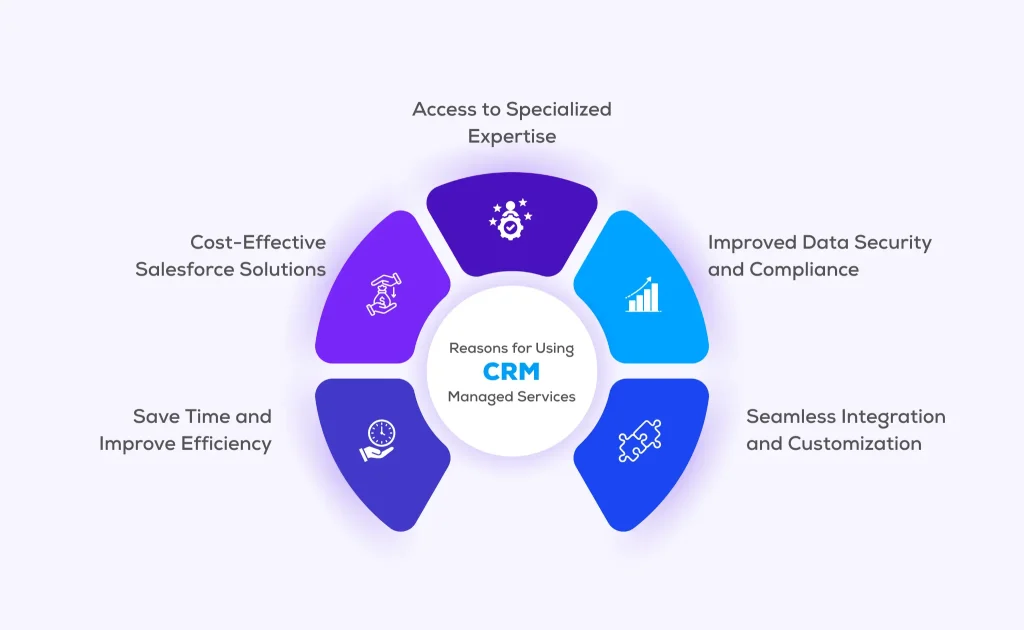
Salesforce managed service providers deliver continuous platform administration that goes far beyond basic user management and password resets. These services include monitoring system health metrics, managing data storage limits, optimizing database performance, configuring security settings, and ensuring compliance with industry regulations like GDPR, HIPAA, or SOX depending on your sector.
Professional administrators within a managed services framework conduct regular audits of your Salesforce org to identify technical debt, unused customizations, or processes that could be streamlined for better performance. They implement governance frameworks that prevent the kind of uncontrolled customization sprawl that plagues many self-managed Salesforce implementations. According to industry data, organizations with proper governance see 28% fewer system errors and experience 40% faster deployment times for new features.
These administrators also manage the critical but often overlooked aspects of Salesforce maintenance including workflow rule optimization, process builder refinement, and validation rule management. They ensure that as your business processes evolve, your Salesforce configuration evolves in parallel rather than becoming a constraint on business agility. This includes managing seasonal peak loads, optimizing automation to prevent governor limit issues, and implementing best practices for data management that prevent database bloat and maintain system responsiveness.
Custom Development and Advanced Customization
The power of Salesforce lies in its flexibility, but unlocking that potential requires skilled developers who understand Apex, Lightning Web Components, Visualforce, and the broader Salesforce development ecosystem. Managed services for Salesforce typically include access to certified developers who can build custom applications, create sophisticated automations, and develop integrations that connect Salesforce with your other critical business systems.
Custom development within a managed services model follows enterprise-grade development practices including version control, sandbox testing, comprehensive documentation, and staged deployment strategies that minimize risk to production environments. Providers maintain development best practices documentation and coding standards that ensure any custom code remains maintainable, scalable, and aligned with Salesforce’s recommended architectural patterns. This disciplined approach prevents the technical debt accumulation that often occurs when development happens in an ad-hoc manner without proper oversight.
Suggested read: How a Plumbing Answering Service Can Transform Your Business and Boost Revenue in 2026
Beyond pure code development, these services encompass declarative customization using Salesforce’s point-and-click tools including Flow Builder, Process Builder, and the various configuration options available within Sales Cloud, Service Cloud, and other products. Expert customization ensures that your Salesforce instance reflects your unique business processes rather than forcing your teams to adapt to generic out-of-the-box workflows. Organizations leveraging professional customization services report 52% improvement in process efficiency compared to those using default configurations.
Strategic Consulting and Roadmap Planning
Perhaps the most valuable but least understood component of Salesforce managed services involves strategic consulting that aligns platform capabilities with business objectives. Expert consultants work with stakeholders across your organization to understand pain points, identify opportunities for improvement, and develop multi-quarter roadmaps that incrementally enhance Salesforce capabilities in ways that deliver measurable business value.
This strategic layer includes conducting regular business reviews where managed service teams analyze platform usage metrics, user adoption patterns, and business outcome data to recommend optimizations. They stay informed about new Salesforce releases and proactively identify which new features could benefit your specific use cases. Rather than implementing every new capability, they prioritize enhancements based on potential ROI, implementation complexity, and alignment with strategic business priorities.
Strategic consultants also provide change management support, helping organizations navigate the human side of CRM optimization. They develop training programs, create user documentation, and implement adoption strategies that ensure investments in platform improvements translate into actual behavior change among end users. Research consistently shows that technology adoption rates improve by 60-70% when proper change management accompanies technical implementation.
Key Benefits of Outsourcing Salesforce Management
Cost Efficiency and Resource Optimization
Building an internal team with the full spectrum of Salesforce expertise required for comprehensive platform management represents a significant investment. A certified Salesforce administrator commands an average salary of $85,000-$120,000 annually, while experienced developers and architects can exceed $150,000 in competitive markets. Assembling a complete team with administration, development, architecture, and strategic consulting capabilities could easily require $500,000+ in annual salary costs before accounting for benefits, training, and overhead.
Salesforce managed services provide access to this entire spectrum of expertise at a fraction of the cost of building internal capabilities. By leveraging a shared services model, organizations gain access to senior-level expertise that would be cost-prohibitive to hire full-time. A typical managed services engagement might cost $5,000-$15,000 monthly depending on the scope of services and level of support required, delivering immediate access to multi-disciplinary teams that can scale support up or down based on business needs.
This cost efficiency extends beyond pure salary considerations. Managed service providers maintain training programs that keep their teams current with platform changes, absorb the cost of certifications and professional development, and have established processes for knowledge transfer that prevent single points of failure. When internal team members leave, organizations often face months of knowledge loss and hiring delays. With managed services, provider organizations maintain continuity and institutional knowledge regardless of individual team member changes.
Access to Specialized Expertise and Certifications
The Salesforce ecosystem has become remarkably complex, with specializations in areas like CPQ (Configure, Price, Quote), Field Service Lightning, Pardot marketing automation, Einstein Analytics, Integration Architecture, and dozens of industry-specific clouds. No single professional can maintain expert-level knowledge across all these domains, yet modern businesses often need capabilities spanning multiple specializations.
Managed service providers employ teams with diverse certification portfolios and specialized experience across different Salesforce products and industries. When your organization needs to implement Field Service Lightning, the provider can assign consultants who have implemented similar projects dozens of times. When you need to integrate Salesforce with your ERP system, they can deploy integration specialists with proven track records. This depth and breadth of expertise simply isn’t available within single-company IT departments.
The certification advantage extends to staying current with Salesforce’s three annual release cycles. Salesforce introduces hundreds of new features and updates throughout the year, and providers invest in ensuring their teams understand these changes and can advise clients on relevant new capabilities. Organizations with managed services receive proactive guidance about release impacts and opportunities, while self-managed implementations often miss valuable new features simply because internal teams lack bandwidth to stay current with platform evolution.
Faster Implementation and Time-to-Value
Organizations attempting to manage Salesforce internally often face significant delays in implementing new capabilities due to competing priorities, limited resources, and knowledge gaps. A customization that might take an experienced managed services team two weeks could take an internal team with less Salesforce-specific experience months to complete, during which business value remains unrealized and opportunity costs accumulate.
Managed service providers for Salesforce bring established methodologies, reusable components, and proven implementation patterns that accelerate delivery timelines. They’ve encountered and solved similar challenges across multiple client engagements, allowing them to avoid common pitfalls and apply lessons learned from previous implementations. This experience translates directly into faster time-to-value for new initiatives and reduced risk of project delays or failures.
Speed advantages compound over time as providers develop deep familiarity with your specific Salesforce environment, business processes, and organizational dynamics. After an initial onboarding period, managed services teams can often estimate, scope, and deliver enhancements more quickly than internal teams because they maintain dedicated focus on Salesforce rather than splitting attention across multiple technologies and competing priorities.
How Salesforce Managed Services Drive Business Outcomes
Enhanced User Adoption and Productivity
The most sophisticated Salesforce configuration delivers zero value if users don’t adopt it enthusiastically. Professional Salesforce management services focus intensely on user experience, ensuring that the platform makes daily work easier rather than creating additional friction. Managed service teams conduct regular user feedback sessions, analyze usage data to identify adoption challenges, and implement refinements that remove obstacles to enthusiastic platform use.
User productivity improvements manifest in multiple ways: sales representatives spend less time on data entry and more time with prospects, service agents resolve cases faster with better access to customer information, and managers gain real-time visibility into business operations without requiring manual reporting. Organizations with well-managed Salesforce implementations report average productivity gains of 27% among CRM users compared to pre-implementation baselines.
These adoption gains result from continuous optimization rather than one-time implementation. Managed services teams regularly review user behavior patterns, identify power users whose workflows could be standardized and shared, and implement incremental improvements that compound over time. They also provide ongoing training and support that helps users discover capabilities they weren’t aware of, turning basic users into power users and power users into platform advocates who drive adoption among their peers.
Improved Data Quality and Business Intelligence
Poor data quality undermines every business process that depends on CRM information, from sales forecasting to customer segmentation to marketing campaign targeting. Salesforce managed services implement data governance frameworks that establish data quality standards, create validation rules that prevent bad data entry, and develop processes for regular data cleansing and enrichment.
Professional data management extends to implementing duplicate management strategies, establishing data integration patterns that maintain consistency across systems, and creating dashboards and reports that provide leadership with reliable business intelligence. Organizations with mature data management practices report 35% improvement in forecast accuracy and 42% reduction in time spent reconciling data across systems.
Suggested read: Professional Gutter Inspection Services: Protect Your Home from Water Damage in 2025
Advanced managed services include implementing data stewardship roles, creating automated data quality monitoring, and leveraging tools like Salesforce’s Data.com or third-party enrichment services to maintain current, accurate customer information. They also design data architectures that support both operational needs and analytical requirements, ensuring that as data volumes grow, system performance and query speeds remain acceptable for end users and reporting systems alike.
Scalability and Platform Evolution
Business requirements evolve continuously, and your Salesforce platform must evolve in parallel to remain valuable. Managed Salesforce services provide the architectural planning and technical capabilities necessary to scale your implementation as business volumes grow, product offerings expand, or organizational structures change.
Scalability encompasses both technical and functional dimensions. On the technical side, providers implement performance optimization strategies, archive historical data appropriately, and design architectures that can handle increasing transaction volumes without degradation. Functionally, they ensure that as you add new business units, enter new markets, or launch new products, your Salesforce configuration can accommodate these changes without requiring disruptive redesigns.
This evolutionary capability proves particularly valuable during periods of rapid growth or significant business transformation. Organizations going through mergers and acquisitions, international expansion, or major product pivots require CRM platforms that can adapt quickly. Managed service providers bring the expertise and resources necessary to manage these transitions smoothly, often having guided other clients through similar transformations and understanding the technical and organizational challenges involved.
Salesforce Managed Services vs. In-House Management: A Detailed Comparison
| Factor | Managed Services | In-House Management |
|---|---|---|
| Cost Structure | Predictable monthly fees, typically $60,000-$180,000 annually | Salaries $250,000-$500,000+ for qualified team, plus benefits, training, tools |
| Expertise Breadth | Access to multiple specialists (admins, developers, architects, consultants) | Limited to capabilities of hired individuals, often 1-3 generalists |
| Scalability | Easily scale up/down based on needs, no hiring/firing delays | Fixed capacity, requires months to add capabilities through hiring |
| Knowledge Continuity | Provider maintains institutional knowledge regardless of individual turnover | Significant risk of knowledge loss when team members leave |
| Release Management | Proactive guidance on 3 annual releases, team stays current automatically | Requires dedicated time for team to learn releases, often reactive |
| Focus | Dedicated Salesforce expertise, not distracted by other technologies | Often split attention across multiple systems and priorities |
| Risk Mitigation | Distributed risk across team, established backup processes | Single points of failure if key team member leaves or unavailable |
| Best Practices | Cross-client learning, exposure to diverse implementations and solutions | Limited to single organization’s experience, may reinvent solutions |
Selecting the Right Salesforce Managed Services Provider
Evaluating Provider Certifications and Experience
Not all Salesforce managed service providers offer equivalent capabilities or quality. When evaluating potential partners, certification status serves as a critical baseline indicator of technical competency. Salesforce’s partner program includes several tiers including Registered Partners, Silver Partners, Gold Partners, and Platinum Partners, with higher tiers indicating greater numbers of certified professionals and demonstrated customer success.
Beyond partnership tier, examine the specific certifications held by team members who would work on your account. Key certifications to look for include Salesforce Certified Administrator, Salesforce Certified Advanced Administrator, Platform Developer I and II, Platform App Builder, and specialized certifications relevant to your implementation such as Sales Cloud Consultant, Service Cloud Consultant, or Marketing Cloud Consultant. Providers should be transparent about the certification levels of professionals assigned to your engagement rather than simply promoting company-wide certification counts.
Experience within your industry vertical provides another important selection criterion. Providers who have implemented Salesforce across multiple organizations in financial services, healthcare, manufacturing, or your specific sector bring valuable contextual understanding of common challenges, regulatory requirements, and industry-specific best practices. Ask for case studies and references from similar organizations to validate claimed expertise and understand the provider’s approach to challenges you’re likely to encounter.
Understanding Service Level Agreements and Support Models
The operational details of how managed services for Salesforce will be delivered deserve careful attention during provider selection. Service Level Agreements (SLAs) should clearly define response times for different severity levels, specify which services are included in base fees versus incurring additional charges, and establish escalation procedures for urgent issues. Typical SLAs might promise 2-hour response for critical issues, 1 business day for high priority items, and 2-3 business days for routine requests.
Support models vary significantly across providers. Some offer dedicated teams exclusively serving your organization, providing deep familiarity with your environment at premium pricing. Others use pooled support models where multiple consultants might work on your requests depending on availability and specialization. Hybrid approaches assign a dedicated account manager for continuity while leveraging broader teams for specialized needs. Understanding these models helps set appropriate expectations about relationship continuity and knowledge retention.
Communication cadences and reporting structures merit discussion during provider selection. Effective managed services include regular business reviews, transparent activity reporting, and proactive communication about platform changes or optimization opportunities. Clarify how the provider will communicate progress on projects, report time utilization, and collaborate with your internal stakeholders. Providers should demonstrate cultural fit with your organization’s communication style and operational rhythms.
Pricing Models and Contract Structures
Salesforce managed services pricing typically follows several common models, each with distinct advantages and considerations. Time-and-materials pricing bills actual hours worked at agreed rates, providing maximum flexibility but less cost predictability. Retainer models provide fixed monthly fees for specified service levels, offering budget certainty while potentially leaving unused capacity if service needs are lighter than anticipated. Value-based pricing ties fees to business outcomes or performance metrics, aligning provider incentives with client success but requiring sophisticated measurement frameworks.
Many organizations benefit from hybrid approaches that include a baseline retainer for ongoing administration and support with provisions for additional project work at time-and-materials rates. This structure provides the predictability of fixed costs for routine services while accommodating occasional larger initiatives without requiring contract amendments. When evaluating pricing, consider not just hourly rates but total anticipated costs including any minimums, setup fees, or charges for common services like training or documentation.
Contract terms should address intellectual property ownership, confidentiality protections, termination provisions, and knowledge transfer requirements. Ensure that any custom code or configurations developed by the provider belong to your organization and that you’ll receive comprehensive documentation enabling transition to alternative providers if necessary. Look for contracts that allow periodic review and adjustment of service levels based on evolving needs rather than locking you into fixed arrangements that may not reflect future requirements.
Real-World Success: Salesforce Managed Services Case Studies
Case Study: Manufacturing Company Achieves 156% ROI in 18 Months
A mid-market manufacturing company with $200 million in annual revenue struggled with its Salesforce implementation that had been self-managed for three years. Sales representatives complained about system complexity, managers lacked reliable forecasting data, and the platform had become viewed as a compliance burden rather than a strategic asset. User adoption hovered around 45%, and the company was considering abandoning Salesforce entirely.
After engaging a Salesforce managed services provider, the organization underwent a comprehensive platform assessment that identified 23 specific areas for improvement ranging from data quality issues to poorly designed workflows and underutilized automation capabilities. Over 18 months, the managed services team systematically addressed these issues while also implementing Sales Cloud enhancements including opportunity scoring, quote generation automation, and mobile capabilities for field sales teams.
Results exceeded expectations across multiple dimensions. User adoption increased to 89%, sales cycle length decreased by 23%, and forecast accuracy improved from 62% to 91%. The sales team reported saving an average of 4.5 hours per week on administrative tasks, translating into 15% more time available for customer-facing activities. The company calculated a 156% return on investment from managed services costs by measuring the value of increased sales productivity, reduced sales cycle times, and improved forecast accuracy that enabled better inventory planning. The managed services relationship continues as the provider now focuses on advanced analytics implementation and integration with the company’s new ERP system.
Case Study: Healthcare Provider Scales Salesforce Across 40 Locations
A regional healthcare provider operating 40 clinics across three states initially implemented Salesforce at its headquarters for patient relationship management and community outreach programs. As the organization sought to scale this implementation across all locations, internal IT resources proved insufficient to manage the complexity of multi-location rollout while maintaining existing systems.
Suggested read: Integrated Service Solutions: Transforming Business Operations Through Unified Management
The healthcare provider engaged managed Salesforce services specifically focused on scaling expertise and healthcare industry knowledge. The provider conducted detailed requirements gathering across different clinic types, developed standardized configurations that could be customized for local needs, and created comprehensive training programs for diverse user populations including physicians, nurses, administrative staff, and community health workers.
The managed services team implemented Health Cloud capabilities including care plan management, patient communication tools, and integration with electronic health record systems. They navigated complex HIPAA compliance requirements, implemented appropriate security controls and data governance frameworks, and ensured that audit trails met regulatory standards. The rollout occurred in phases over 12 months, with the managed services team providing intensive support during initial go-lives at each location.
Post-implementation metrics demonstrated strong success: patient engagement scores increased by 34%, no-show rates decreased by 28% through better appointment reminder systems, and community health outreach programs reached 45% more patients through improved campaign management. The healthcare provider estimates that better patient engagement and reduced no-shows generated $2.7 million in additional revenue during the first year while improving patient outcomes across key health indicators. The organization continues working with its managed services provider on new initiatives including telehealth integration and predictive analytics for at-risk patient identification.
Integration Excellence: Connecting Salesforce with Your Business Ecosystem
Modern enterprises operate complex technology landscapes where Salesforce must integrate seamlessly with ERP systems, marketing automation platforms, customer support tools, financial systems, and numerous other applications. Salesforce managed services provide the integration expertise necessary to create cohesive technology ecosystems where data flows smoothly between systems and users experience seamless workflows that span multiple platforms.
Integration approaches range from simple point-to-point connections using native Salesforce integration tools to sophisticated middleware implementations using platforms like MuleSoft (which Salesforce acquired specifically to address complex integration needs). Managed service providers assess your integration requirements, recommend appropriate architectural approaches, and implement robust integration patterns that maintain data consistency, handle errors gracefully, and provide visibility into data flow between systems.
Beyond initial integration implementation, ongoing management proves critical for maintaining reliability as systems evolve. Managed services teams monitor integration health, address synchronization issues before they impact users, and manage the ongoing maintenance required when connected systems undergo updates or changes. They also implement integration governance frameworks that prevent the kind of spaghetti architecture that develops when integrations proliferate without proper planning and documentation.
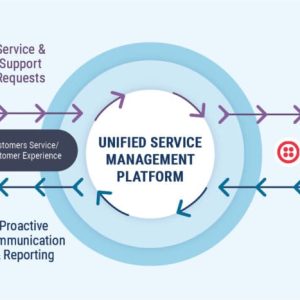
For organizations exploring broader digital transformation strategies, integrated service solutions represent a critical capability that extends beyond Salesforce-specific services. Comprehensive service providers can coordinate across your entire technology portfolio, ensuring that Salesforce integrations align with broader architecture strategies and that your CRM serves as a true system of engagement connecting all customer-facing business processes.
Maximizing Your Salesforce Investment Through Continuous Optimization
The most successful Salesforce managed services engagements embrace continuous improvement philosophies where platform optimization never ends. Rather than treating Salesforce as a completed project that requires only maintenance, effective providers partner with clients on ongoing evolution that incrementally enhances capabilities, addresses emerging challenges, and leverages new platform features as Salesforce releases them.
Continuous optimization begins with establishing baseline performance metrics across dimensions including user adoption rates, platform utilization, process efficiency, data quality, and business outcomes like sales cycle length or customer satisfaction scores. Managed services teams regularly review these metrics, identifying trends and opportunities for improvement. They conduct quarterly business reviews with stakeholders to ensure platform evolution remains aligned with changing business priorities and that investments in optimization deliver measurable value.
This optimization extends across the full spectrum of Salesforce capabilities. Declarative improvements might include refining flows and processes to eliminate unnecessary steps, implementing conditional logic that personalizes user experiences, or creating automations that eliminate manual tasks. Technical optimizations could involve refactoring custom code for better performance, implementing caching strategies that reduce page load times, or restructuring data models that have become inefficient as data volumes grew.
The cumulative impact of continuous optimization often exceeds the value delivered by initial implementation. Organizations that have worked with managed service providers for multiple years frequently report that their Salesforce platforms deliver exponentially more value than when initially deployed, not through massive redesigns but through countless incremental improvements that compound over time. This evolutionary approach also proves more cost-effective than periodic complete overhauls that attempt to address years of accumulated technical debt in single large projects.
Advanced Capabilities: AI, Analytics, and Automation
Modern Salesforce managed services increasingly focus on advanced capabilities that leverage artificial intelligence, sophisticated analytics, and intelligent automation to drive competitive advantages. Salesforce’s Einstein AI provides capabilities ranging from predictive lead scoring to automated service case classification to next-best-action recommendations, but realizing value from these features requires thoughtful implementation and ongoing optimization.
AI implementation through managed services typically begins with identifying high-value use cases where predictive capabilities could improve business outcomes. Sales organizations might implement Einstein Opportunity Scoring to help representatives prioritize their activities, while service organizations could deploy Einstein Case Classification to automatically route cases to appropriate teams. Marketing teams leverage Einstein Attribution to understand which campaigns drive revenue and Einstein Send Time Optimization to maximize email engagement.
Sophisticated analytics implementation transforms Salesforce from an operational system into a strategic business intelligence platform. Managed services teams build complex dashboards and reports that provide executives with real-time visibility into business performance, create embedded analytics that surface insights within user workflows, and implement Einstein Analytics (Tableau CRM) for advanced data exploration and predictive modeling. These analytics capabilities often integrate data from multiple systems, providing comprehensive views of customer relationships and business performance that transcend individual applications.
Intelligent automation extends beyond simple workflow rules into complex orchestrations that coordinate activities across teams and systems. Process automation might include approval workflows, quote-to-cash processes, customer onboarding sequences, or renewal management procedures that automatically coordinate actions across sales, finance, fulfillment, and customer success teams. Effective automation implementation requires careful process design, extensive testing, and continuous monitoring to ensure automated processes deliver intended results without creating unintended bottlenecks or errors.
Training and Enablement: Building Internal Salesforce Competency
While managed services for Salesforce provide professional expertise that most organizations cannot economically build internally, the most successful engagements also focus on building client capabilities over time. Rather than creating permanent dependency, effective providers transfer knowledge strategically, enabling client teams to handle increasingly sophisticated tasks while the managed services team focuses on more complex challenges and strategic initiatives.
Training programs within managed services engagements should be customized to different user populations and skill levels. End user training helps sales representatives, service agents, and other daily users understand how to leverage Salesforce effectively for their specific roles. Power user training elevates selected users into platform champions who can assist their colleagues and contribute to optimization ideas. Administrator training develops internal capabilities for routine configuration changes, user management, and basic troubleshooting.
Suggested read: Martin Luther King Jr Multi Service Ambulatory Care Center: Your Gateway to Accessible Healthcare in South Los Angeles
Knowledge transfer occurs through multiple mechanisms beyond formal training sessions. Joint working sessions where managed services team members collaborate with client staff provide hands-on learning opportunities. Comprehensive documentation of configurations, customizations, and processes creates reference materials that empower self-service problem-solving. Regular show-and-tell sessions where the managed services team demonstrates new capabilities or optimization approaches help client teams understand what’s possible and how to think strategically about platform evolution.
The balance between building internal capabilities and maintaining managed services relationships varies by organization. Some companies aspire to eventually bring most Salesforce management in-house while retaining managed services for specialized needs like complex integrations or major implementations. Others recognize that comprehensive in-house capabilities remain economically unjustifiable and focus internal staff on business relationship management and requirements definition while relying on managed services for technical execution. Both approaches succeed when expectations align and knowledge transfer occurs intentionally rather than accidentally.
Security, Compliance, and Risk Management
Salesforce managed service providers play critical roles in maintaining security posture and regulatory compliance as threats evolve and regulatory requirements change. Security management extends beyond basic user permissions to encompass comprehensive approaches including data encryption, API security, authentication protocols, audit trail maintenance, and incident response procedures.
Compliance requirements vary dramatically by industry and geography. Healthcare organizations must maintain HIPAA compliance for protected health information. Financial services firms face SOX requirements, FINRA regulations, and various international financial regulations. European operations require GDPR compliance with strict data privacy and subject rights requirements. Managed services teams with relevant industry experience understand these regulatory frameworks and implement Salesforce configurations that support compliance while maintaining operational efficiency.
Risk management within managed services engagements includes disaster recovery planning, backup strategies, and business continuity procedures. Providers should maintain documented processes for responding to security incidents, data corruption events, or platform failures. They implement change management procedures that require testing and approval before production deployments, reducing risks from configuration changes or custom development. Regular security assessments identify vulnerabilities and ensure that security controls evolve as new threats emerge.
Organizations operating in highly regulated industries or handling sensitive data should verify that managed services providers maintain appropriate security certifications like SOC 2, ISO 27001, or industry-specific accreditations. Provider staff handling client data should undergo background checks, sign confidentiality agreements, and receive security training. Access controls should follow least-privilege principles where consultants receive only permissions necessary for their specific responsibilities rather than blanket administrative access.
Navigating Organizational Change with Managed Services Support
Technology implementations succeed or fail primarily based on human factors rather than technical considerations. Salesforce managed services increasingly recognize this reality and incorporate change management capabilities that help organizations navigate the human side of CRM transformation. Change management encompasses communication strategies, stakeholder engagement, resistance mitigation, and culture shifts that determine whether platform capabilities translate into changed behaviors and improved outcomes.
Effective change management begins during initial planning phases where managed services teams identify key stakeholders, understand political dynamics, and recognize potential sources of resistance. They develop communication plans that keep affected populations informed about upcoming changes, explain rationale for platform modifications, and address concerns proactively. Executive sponsorship proves critical, and mature managed services engagements include coaching executives on how to visibly champion Salesforce adoption and model desired behaviors.
User resistance often stems from perceptions that new processes create more work or that existing approaches work adequately. Managed services teams address resistance through several approaches including highlighting quick wins that demonstrate immediate value, implementing feedback loops that show users their input shapes platform evolution, and celebrating adoption successes across the organization. They also ensure that changes genuinely improve user experiences rather than simply optimizing for organizational preferences at the expense of individual productivity.
Cultural transformation from viewing CRM as a compliance burden to embracing it as a strategic enabler requires sustained effort over extended timeframes. Managed services providers support this transformation through consistent reinforcement of value messages, regular sharing of success metrics that demonstrate impact, and continuous refinement of capabilities based on evolving user needs. Organizations that successfully transform CRM culture report that managed services support proved instrumental in maintaining momentum during inevitable challenges and setbacks that accompany significant change initiatives.
Take Control of Your Salesforce Success with Expert Managed Services
Your Salesforce investment represents significant financial and strategic commitment to your organization’s digital infrastructure. Whether you’re struggling with an underutilized implementation, planning expansion into new capabilities, or simply seeking to maximize value from your existing platform, salesforce managed services provide the expertise, resources, and strategic guidance necessary to transform your CRM into a genuine competitive advantage. The difference between adequate and exceptional Salesforce performance often comes down to having dedicated experts who understand both the technical platform and your specific business context working continuously on optimization, innovation, and value realization.
Organizations across industries are discovering that attempting to manage Salesforce internally with limited resources leads to suboptimal outcomes, frustrated users, and unrealized potential. By partnering with experienced managed services providers, you gain immediate access to specialized expertise, proven methodologies, and ongoing platform evolution that would require years and significant investment to build internally. The question isn’t whether professional Salesforce management delivers value—the evidence overwhelmingly demonstrates that it does—but rather which provider represents the best fit for your organization’s specific needs, culture, and objectives.
Ready to transform your Salesforce implementation from a cost center into a growth engine? Contact specialized salesforce managed services providers to discuss how professional platform management can address your specific challenges and unlock capabilities you didn’t realize were possible. Many providers offer complimentary assessments that evaluate your current implementation, identify optimization opportunities, and estimate potential ROI from managed services engagement. These assessments provide valuable insights regardless of whether you immediately engage services, helping you understand your platform’s current state and potential future state.
Frequently Asked Questions About Salesforce Managed Services
What exactly are salesforce managed services and how do they differ from consulting?
Salesforce managed services provide ongoing platform administration, optimization, and support through dedicated teams who serve as extensions of your internal resources. Unlike consulting engagements that focus on specific projects with defined endpoints, managed services establish continuous relationships where providers handle day-to-day operations, respond to user requests, implement enhancements, and proactively optimize your platform over extended periods. Consulting typically addresses strategic initiatives or major implementations, while managed services ensure sustained platform health and continuous improvement after implementations complete.
How much do salesforce managed services typically cost?
Salesforce managed services pricing varies significantly based on the scope of services, your organization’s size, platform complexity, and required service levels. Small businesses might spend $3,000-$7,000 monthly for basic administration and support, while mid-market companies typically invest $8,000-$20,000 monthly for comprehensive services including development, integrations, and strategic consulting. Enterprise organizations with complex implementations often spend $25,000-$50,000+ monthly for dedicated teams providing white-glove service. Most providers offer tiered service packages and can customize engagements to match specific needs and budgets.
What qualifications should I look for when selecting a salesforce managed services provider?
Suggested read: Understanding the Department of the Treasury Bureau of the Fiscal Service: Your Complete Resource for Federal Financial Operations
Prioritize providers with strong Salesforce partnership status (Gold or Platinum partners indicate significant certified staff and customer success), relevant industry experience in your sector, and transparent certification portfolios showing expertise across needed specializations. Request references from organizations similar to yours, review case studies demonstrating measurable outcomes, and evaluate cultural fit through conversations with team members who would work on your account. Verify that providers maintain security certifications like SOC 2 if you handle sensitive data, and ensure they have established methodologies for project management, change control, and knowledge transfer.
Can salesforce managed services help with data migration and system integrations?
Yes, comprehensive managed services include data migration expertise for moving information from legacy systems into Salesforce while maintaining data quality and business continuity. Providers conduct data profiling to understand current state, develop transformation rules to clean and standardize data, and execute migrations using proven methodologies that minimize risk and downtime. Integration services connect Salesforce with ERP systems, marketing platforms, customer support tools, and other critical applications using appropriate integration patterns ranging from simple point-to-point connections to sophisticated middleware implementations. Ongoing integration management ensures connections remain reliable as systems evolve.
How quickly can salesforce managed services improve my current Salesforce implementation?
Initial improvements often appear within the first 30-60 days as managed services teams address quick wins like resolving user pain points, fixing broken workflows, and improving data quality issues. More substantial transformations typically require 3-6 months as providers conduct comprehensive assessments, develop optimization roadmaps, and systematically implement improvements across multiple areas. Organizations usually experience significant measurable impact—improved user adoption, better data quality, increased productivity—within 6-12 months of engaging managed services. The continuous optimization model means benefits accumulate over time, with platforms delivering exponentially more value after multi-year managed services relationships compared to initial implementation baselines.
What happens to my Salesforce data and customizations if I end a managed services relationship?
Reputable managed services providers ensure complete knowledge transfer and documentation when relationships end, whether due to transitioning to alternative providers or bringing management in-house. Your Salesforce data always remains your property and stays within your Salesforce org regardless of service provider relationships. Custom code and configurations developed by providers should be documented comprehensively with technical specifications, architecture diagrams, and administrative guides enabling continuity. Quality contracts address transition procedures, specifying provider obligations for knowledge transfer, documentation delivery, and cooperation during handoff periods. Always verify intellectual property ownership provisions before engaging managed services to ensure you retain rights to all customizations and developments.
Note: Statistics and case study details in this article are based on industry research and representative examples. Individual results vary based on implementation complexity, organizational readiness, and specific provider capabilities.