Understanding Integrated Service Solutions in Modern Business
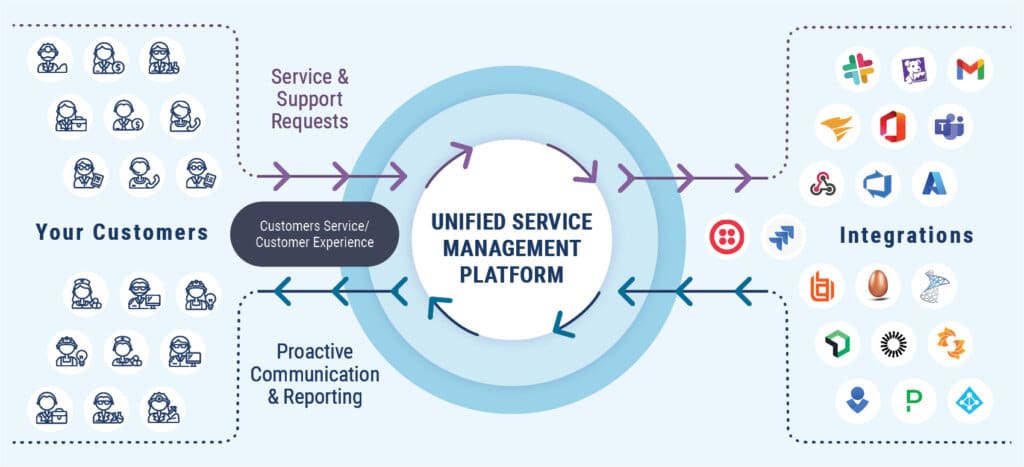
Integrated service solutions represent a revolutionary approach to managing multiple business functions through a single, cohesive platform. These comprehensive systems combine various operational elements such as customer relationship management, supply chain operations, financial management, and human resources into one unified framework. Organizations implementing integrated service solutions experience enhanced efficiency, reduced operational redundancy, and improved decision-making capabilities across all departments.
The fundamental principle behind these solutions involves breaking down traditional silos that typically exist between different business units, creating instead a seamless flow of information and resources throughout the entire organization. Companies ranging from small startups to large enterprises are increasingly recognizing that fragmented systems lead to duplicated efforts, inconsistent data, and missed opportunities for optimization. By adopting integrated solutions for service management, businesses can achieve real-time visibility into their operations, enabling faster response times to market changes and customer needs.
The evolution of integrated service solutions has been driven by technological advancements in cloud computing, artificial intelligence, and data analytics. Modern service integration solutions leverage these technologies to provide businesses with unprecedented capabilities for automation, predictive analysis, and strategic planning. According to recent industry research, companies utilizing integrated platforms report an average productivity increase of 35% within the first year of implementation. These systems eliminate the need for manual data transfer between different applications, significantly reducing the risk of errors and freeing up valuable employee time for more strategic activities. The integration extends beyond internal operations to include external stakeholders such as suppliers, distributors, and customers, creating an ecosystem where information flows seamlessly across organizational boundaries.
Key Components of Comprehensive Integrated Service Solutions
Core Infrastructure and Platform Architecture
The foundation of any effective integrated service solution rests upon a robust technological infrastructure that can handle multiple processes simultaneously while maintaining data integrity and system security. This infrastructure typically includes enterprise resource planning (ERP) systems, customer relationship management (CRM) platforms, and specialized modules for industry-specific requirements. The architecture must be scalable to accommodate business growth, flexible enough to adapt to changing needs, and secure enough to protect sensitive organizational data. Modern platforms utilize microservices architecture, which allows individual components to be updated or replaced without disrupting the entire system. Cloud-based solutions have become increasingly popular because they offer greater accessibility, reduced hardware costs, and automatic updates that keep the system current with the latest features and security patches.
Essential components include:
- Centralized database management that ensures all departments access the same accurate, up-to-date information
- Application programming interfaces (APIs) that facilitate communication between different software modules
- User authentication and authorization systems that control access based on roles and responsibilities
- Data analytics engines that process information and generate actionable insights
- Workflow automation tools that streamline repetitive processes and reduce manual intervention
- Mobile accessibility features that enable employees to access systems from any location
- Backup and disaster recovery mechanisms that protect against data loss
- Compliance monitoring tools that ensure adherence to industry regulations
Integration with Existing Business Processes
Successfully implementing integrated service solutions requires careful alignment with existing business workflows and organizational culture. The transition from legacy systems to integrated platforms represents a significant change that affects every aspect of operations. Companies must conduct thorough assessments of their current processes to identify inefficiencies, redundancies, and areas where integration can deliver the most value. This evaluation should include input from employees at all levels, as frontline workers often have valuable insights into practical challenges that may not be visible to management.
The implementation strategy should be phased, starting with critical functions and gradually expanding to encompass additional departments and processes. Change management becomes crucial during this transition, as resistance from employees accustomed to traditional methods can undermine the entire initiative.
Suggested read: Salesforce Managed Services: Transform Your CRM Investment into Business Growth
Organizations should establish clear metrics for measuring success before implementation begins. These metrics might include reduction in processing time, improvement in data accuracy, decrease in operational costs, increase in customer satisfaction scores, or enhancement in employee productivity. Regular monitoring against these benchmarks allows for timely adjustments and demonstrates the tangible value of the integrated solutions to stakeholders. Training programs must be comprehensive and ongoing, ensuring that all users understand not only how to operate the new systems but also why the integration benefits their specific roles and the organization as a whole.
Strategic Benefits of Adopting Integrated Service Solutions
Operational Efficiency and Cost Reduction
The most immediate and measurable advantage of implementing integrated service solutions manifests in operational efficiency gains that translate directly to bottom-line improvements. When all business functions operate within a unified system, organizations eliminate the time and resources previously spent on manual data entry, reconciliation between different platforms, and communication gaps between departments. A manufacturing company that implemented an integrated solution reported reducing their order-to-delivery cycle time by 42%, while simultaneously decreasing operational costs by 28%. These efficiency improvements stem from automated workflows that handle routine tasks, intelligent routing of requests to appropriate departments, and real-time visibility into resource availability and utilization.
Quantifiable benefits include:
| Benefit Category | Average Improvement | Implementation Timeframe |
|---|---|---|
| Data Processing Speed | 60% faster | 3-6 months |
| Error Reduction | 75% fewer mistakes | 6-12 months |
| Customer Response Time | 50% reduction | 3-9 months |
| Inventory Accuracy | 85% improvement | 6-12 months |
| Employee Productivity | 35% increase | 12-18 months |
| Operating Costs | 25% reduction | 12-24 months |
The consolidation of multiple software licenses, maintenance contracts, and support agreements into a single integrated service platform generates substantial cost savings. Organizations no longer need to maintain separate IT infrastructure for each business function, reducing both capital expenditures and ongoing operational expenses. The unified nature of integrated solutions also simplifies vendor management, as companies deal with fewer suppliers and benefit from volume discounts on licensing and support services. Additionally, the improved accuracy and timeliness of information reduces costly errors such as duplicate orders, incorrect shipments, or billing mistakes that previously required expensive correction processes.
Enhanced Decision-Making Through Data Integration
Integrated service solutions revolutionize organizational decision-making by providing comprehensive, real-time access to data from across all business functions. Executives and managers no longer need to wait for monthly reports or request special analyses to understand performance trends or identify emerging issues. The integrated nature of these systems means that data is automatically aggregated, standardized, and presented in formats that facilitate quick comprehension and action. Advanced analytics capabilities built into modern platforms can identify patterns, predict future trends, and recommend optimal courses of action based on historical data and current conditions.
A retail chain implementing an integrated solution discovered that their inventory management, sales tracking, and customer behavior data, when combined and analyzed together, revealed purchasing patterns that weren’t visible when examining each data source separately. This insight allowed them to optimize their product mix, reduce stockouts by 63%, and increase sales per square foot by 31%. The ability to conduct this type of cross-functional analysis represents one of the most powerful advantages of integration, as it enables organizations to uncover relationships and opportunities that remain hidden when data exists in isolated systems. Real-time dashboards provide stakeholders with immediate visibility into key performance indicators, allowing for proactive management rather than reactive problem-solving.
Implementation Strategies for Integrated Service Solutions
Planning and Assessment Phase
The journey toward successful integrated service solutions begins with comprehensive planning that establishes clear objectives, identifies key stakeholders, and allocates appropriate resources. Organizations must start by documenting their current state, including all existing systems, processes, data flows, and integration points. This documentation serves as the baseline against which future improvements will be measured and helps identify areas of highest priority for integration. Stakeholder engagement during this phase is critical, as buy-in from leadership, IT staff, department heads, and end users significantly influences implementation success. Companies should form cross-functional teams that represent all areas affected by the integration, ensuring that diverse perspectives inform decision-making throughout the project.
Critical planning elements include:
- Business process mapping that visualizes current workflows and identifies optimization opportunities
- Requirements gathering that captures functional needs from all departments and user groups
- Technology assessment that evaluates existing infrastructure and determines compatibility with proposed solutions
- Budget development that accounts for software costs, implementation services, training, and ongoing support
- Timeline creation that establishes realistic milestones and accounts for potential delays
- Risk identification that anticipates challenges and develops mitigation strategies
- Success criteria definition that specifies measurable outcomes for evaluating implementation effectiveness
- Vendor evaluation that compares different integrated service solution providers based on capabilities, costs, and support
Phased Implementation and Change Management
Successful deployment of integrated service solutions typically follows a phased approach that minimizes disruption while building organizational confidence in the new systems. Rather than attempting to replace all legacy systems simultaneously, savvy organizations prioritize core functions for initial implementation, learn from that experience, and then expand integration to additional areas. This methodology allows for course corrections based on early feedback and reduces the risk of catastrophic failures that could undermine the entire initiative. A financial services firm adopted this approach by first integrating their customer relationship management and billing systems, demonstrating quick wins that built enthusiasm for subsequent phases involving operations and compliance functions.
Change management represents perhaps the most underestimated aspect of integrated solution implementation, yet it often determines whether the project succeeds or fails. Employees naturally resist changes to familiar workflows, especially when they perceive the new systems as threatening their job security or increasing their workload. Organizations must address these concerns through transparent communication about the reasons for integration, the benefits it will bring to individual roles, and the support available during the transition. Training programs should be role-specific, hands-on, and available in multiple formats to accommodate different learning styles. Establishing a network of “super users” within each department creates internal champions who can assist colleagues and provide feedback to the implementation team about practical challenges and needed adjustments.
Industry-Specific Applications of Integrated Service Solutions
Healthcare and Medical Revenue Services
The healthcare industry has emerged as a leading adopter of integrated service solutions, driven by the complexity of medical operations, stringent regulatory requirements, and the critical importance of accurate patient information. Healthcare organizations implementing integrated platforms can coordinate clinical care, administrative functions, financial management, and patient engagement through unified systems that ensure information consistency across all touchpoints. Electronic health records (EHR) integrated with billing systems, for example, automatically capture procedure codes and patient information, eliminating manual data entry and reducing claim denials due to documentation errors.
For organizations focused on medical revenue service, integration delivers particularly significant value by connecting clinical documentation, coding, billing, collections, and reporting functions into seamless workflows. These integrated solutions enable real-time eligibility verification, automated claim submission, denial management, and revenue cycle analytics that identify optimization opportunities. A large hospital system reported that implementing an integrated revenue cycle management solution reduced their days in accounts receivable by 22 days and increased clean claim rates from 78% to 94%. The system’s ability to flag potential billing issues before claims submission, based on analysis of historical denial patterns, prevented an estimated $3.2 million in lost revenue during the first year alone.
Manufacturing and Supply Chain Management
Manufacturing organizations leverage integrated service solutions to coordinate complex operations spanning procurement, production, quality control, inventory management, distribution, and customer service. These systems provide end-to-end visibility into supply chains, enabling manufacturers to respond quickly to disruptions, optimize inventory levels, and meet customer delivery commitments. Integration between production planning systems and supplier networks allows for just-in-time manufacturing approaches that minimize inventory carrying costs while maintaining production continuity. Real-time monitoring of equipment performance through integrated sensors and analytics platforms enables predictive maintenance that reduces unplanned downtime and extends asset life.
An automotive parts manufacturer implementing an integrated service solution connected their production equipment, quality inspection systems, inventory management, and customer ordering platforms into a unified ecosystem. This integration enabled them to automatically adjust production schedules based on incoming orders, quality test results, and equipment availability, reducing lead times by 35% and inventory costs by 28%. The system’s ability to trace components through the entire manufacturing process also improved their quality management, allowing rapid identification and isolation of defective batches. When a quality issue was detected, the integrated platform could immediately identify all products containing the affected components, notify relevant stakeholders, and initiate corrective actions, reducing response time from days to hours.
Technology Trends Shaping Integrated Service Solutions
Artificial Intelligence and Machine Learning Integration
The incorporation of artificial intelligence (AI) and machine learning (ML) capabilities into integrated service solutions represents the next evolutionary leap in business system capabilities. These technologies enable platforms to move beyond passive data collection and reporting to active analysis, prediction, and autonomous decision-making within defined parameters. AI-powered integrated systems can identify patterns in vast datasets that human analysts would never detect, predict future outcomes with increasing accuracy, and recommend optimal actions based on complex multi-variable analysis. For example, an integrated customer service platform using AI can analyze historical interaction data, current customer behavior, and external factors to predict which customers are at risk of churning, allowing proactive intervention before problems escalate.
Suggested read: How a Plumbing Answering Service Can Transform Your Business and Boost Revenue in 2026
AI-enhanced capabilities include:
- Intelligent automation that handles routine decisions without human intervention while escalating complex situations
- Natural language processing that enables users to interact with systems through conversational interfaces
- Predictive analytics that forecasts demand, resource needs, and potential problems before they occur
- Anomaly detection that identifies unusual patterns indicating fraud, errors, or system malfunctions
- Personalization engines that customize user experiences based on individual preferences and behaviors
- Optimization algorithms that continuously improve processes based on performance feedback
- Computer vision that automates visual inspection and documentation tasks
- Sentiment analysis that gauges customer satisfaction from interactions and feedback
Machine learning models embedded in integrated solutions continuously improve their performance as they process more data, making the systems increasingly valuable over time. A logistics company utilizing ML-enhanced integrated service solutions reported that their delivery route optimization improved by 18% during the first year of operation as the algorithms learned from traffic patterns, weather conditions, and historical performance data. This continuous improvement characteristic means that organizations benefit not just from the initial implementation but from ongoing enhancements that require no additional development investment.
Cloud Computing and Hybrid Infrastructure Models
Cloud-based integrated service solutions have transformed the accessibility and economics of enterprise systems that were previously available only to large corporations with substantial IT budgets. Cloud platforms eliminate the need for organizations to purchase, install, and maintain expensive hardware infrastructure, instead providing access to powerful computing resources on a subscription basis. This model dramatically reduces upfront capital investment, accelerates implementation timelines, and ensures that systems benefit from the provider’s ongoing security updates, performance improvements, and feature additions. Small and medium-sized businesses can now access the same caliber of integrated solutions that Fortune 500 companies use, creating more competitive markets and enabling innovation regardless of organizational size.
Hybrid infrastructure models combining cloud-based and on-premises components offer organizations flexibility to balance control, security, and cost considerations. Sensitive data or processes subject to strict regulatory requirements can remain within private infrastructure while other functions leverage the scalability and cost-effectiveness of cloud services. This approach allows organizations to customize their integrated service solution architecture to their specific needs rather than forcing all-or-nothing decisions. A financial institution might maintain customer transaction processing on secure internal servers while using cloud-based systems for analytics, collaboration, and customer relationship management. The integration layer ensures seamless data flow between these environments while maintaining appropriate security boundaries and compliance with regulatory requirements.
Measuring ROI and Performance of Integrated Service Solutions
Key Performance Indicators and Metrics
Demonstrating the value of integrated service solutions requires establishing clear, measurable key performance indicators (KPIs) that track both operational improvements and financial returns. Organizations should define these metrics before implementation begins, creating baseline measurements against which post-implementation performance can be compared. Effective KPIs span multiple dimensions including operational efficiency, financial performance, customer satisfaction, employee productivity, and data quality. The specific metrics chosen should align with organizational priorities and the particular problems the integrated solution aims to address. A company focused on customer experience might emphasize response time, first-contact resolution rate, and customer satisfaction scores, while an organization prioritizing operational efficiency would track cycle times, error rates, and resource utilization.
Essential performance metrics include:
| Metric Category | Specific Measurements | Target Improvement |
|---|---|---|
| Financial | Total cost of ownership, ROI percentage, cost per transaction | 20-30% reduction |
| Operational | Process cycle time, throughput rate, capacity utilization | 30-50% improvement |
| Quality | Error rate, rework percentage, compliance adherence | 60-80% reduction in errors |
| Customer | Satisfaction score, retention rate, net promoter score | 15-25% improvement |
| Employee | Productivity rate, system adoption percentage, training completion | 25-40% increase |
| Data | Accuracy percentage, timeliness, completeness | 85-95% accuracy target |
Continuous monitoring of these metrics allows organizations to identify areas where the integrated service solution is delivering expected value and areas requiring optimization or additional training. Advanced analytics capabilities within integrated platforms can automate much of this monitoring, generating alerts when metrics fall outside acceptable ranges and providing drill-down capabilities to investigate root causes. A retail organization monitoring their integrated point-of-sale and inventory system discovered through metric analysis that certain locations consistently experienced higher error rates, leading to targeted training interventions that brought performance in line with organizational standards.
Long-Term Value Creation and Strategic Advantages
Beyond immediate operational improvements, integrated service solutions create strategic advantages that compound over time and become increasingly difficult for competitors to replicate. The comprehensive data accumulated within integrated systems becomes an organizational asset that informs strategic planning, product development, market expansion, and competitive positioning. Companies with mature integrated platforms can respond more quickly to market changes, identify emerging opportunities earlier, and make more informed strategic decisions than competitors relying on fragmented systems and incomplete information. This agility translates to competitive advantages that extend far beyond the direct cost savings and efficiency improvements typically emphasized in ROI calculations.
The network effects inherent in integrated solutions mean that value increases as more stakeholders connect to and utilize the platform. When suppliers, distributors, and customers interact with an organization through integrated systems, the resulting data flows create visibility and coordination capabilities that benefit all parties. A manufacturing company that extended their integrated platform to include supplier portals reported that procurement cycle times decreased by 45% and supplier relationship quality improved significantly due to enhanced communication and reduced misunderstandings. These ecosystem benefits create switching costs that strengthen business relationships and improve supply chain resilience against disruptions.
Overcoming Common Challenges in Integration Projects
Technical Complexity and System Compatibility
One of the most significant obstacles organizations face when implementing integrated service solutions involves managing the technical complexity of connecting diverse systems with different architectures, data formats, and communication protocols. Legacy systems particularly pose challenges, as they may lack modern APIs or documentation necessary for integration. Organizations must decide whether to replace aging systems entirely, develop custom integration layers, or maintain parallel processes during extended transition periods. Each approach involves trade-offs between cost, risk, and timeline considerations. Technical complexity also extends to data migration, as information must be cleansed, standardized, and transferred from multiple source systems into the new integrated platform without loss or corruption.
Common technical challenges include:
- Data inconsistency where the same information exists in different formats across various systems
- Integration latency when real-time synchronization between systems creates performance bottlenecks
- Security vulnerabilities introduced at integration points between different platforms
- Version control issues when component systems update independently causing compatibility problems
- Scalability limitations where integration architecture cannot handle growing transaction volumes
- Disaster recovery complexity due to dependencies between integrated components
- Testing challenges resulting from the need to verify functionality across multiple interconnected systems
- Documentation gaps that make troubleshooting and maintenance more difficult
Addressing these technical challenges requires experienced integration specialists who understand both the business requirements and the technical constraints of different platforms. Organizations should invest in robust integration middleware or enterprise service bus (ESB) solutions that provide standardized connection points, data transformation capabilities, and monitoring tools. These platforms act as intermediaries between different systems, handling the complexity of protocol translation and data formatting while providing centralized management of integration flows. A healthcare organization struggling with integration between their clinical, financial, and administrative systems implemented an ESB solution that reduced their integration development time by 60% and improved system reliability through centralized error handling and monitoring.
Organizational Resistance and Cultural Change
Technical challenges, while significant, often pale in comparison to the organizational and cultural obstacles that impede successful integrated service solution implementation. Employees accustomed to working within their departmental silos may resist integration that increases visibility into their activities or changes familiar workflows. Middle managers sometimes view integration as threatening their autonomy or exposing inefficiencies in their operations. These concerns, whether explicitly stated or manifested as passive resistance, can derail implementation efforts through delayed decision-making, incomplete participation in requirements gathering, or inadequate adoption of new systems. Successful integration requires addressing these human factors with the same rigor applied to technical considerations.
Organizations must create compelling narratives that explain how integrated solutions benefit individual employees, not just the company overall. Workers need to understand that integration aims to eliminate frustrating aspects of their jobs—duplicate data entry, difficulty finding information, confusion about process status—rather than to increase monitoring or reduce headcount. Leadership commitment plays a crucial role, as executives must consistently communicate the strategic importance of integration and hold managers accountable for fostering adoption within their teams.
Incentive structures may need adjustment to reward cross-functional collaboration and discourage protective behavior that undermines integration objectives. A manufacturing company addressing resistance to their integrated quality management system created a recognition program highlighting examples of employees using the new platform to solve problems or improve processes, shifting the narrative from mandatory compliance to opportunity for professional contribution.
Suggested read: Understanding the Department of the Treasury Bureau of the Fiscal Service: Your Complete Resource for Federal Financial Operations
Future Directions for Integrated Service Solutions
Internet of Things and Edge Computing Integration
The proliferation of Internet of Things (IoT) devices is expanding the scope and capabilities of integrated service solutions by adding real-time physical world data to the information ecosystems that inform business decisions. Sensors embedded in equipment, products, vehicles, and facilities generate continuous streams of data about condition, location, performance, and utilization. When integrated with enterprise systems, this information enables new levels of operational visibility and control. Manufacturing equipment can report its own maintenance needs, shipping containers can track their location and cargo conditions, retail shelves can signal when inventory runs low, and facilities can automatically adjust environmental controls based on occupancy and usage patterns.
Edge computing architecture addresses the challenges of processing the massive data volumes generated by IoT devices by performing initial analysis close to the data source rather than transmitting everything to centralized systems. This approach reduces network bandwidth requirements, decreases latency for time-critical applications, and improves system resilience by enabling local operation even when network connectivity is interrupted. Integrated service solutions incorporating edge computing can respond to real-time conditions more quickly while still maintaining centralized visibility and coordination. An energy company implementing an integrated platform with edge computing capabilities can detect and respond to grid anomalies in milliseconds at the local level while aggregating data from thousands of edge devices to optimize overall system performance and predict maintenance needs.
Blockchain Integration for Trust and Transparency
Blockchain technology is emerging as a valuable component within integrated service solutions for applications requiring verified, tamper-proof transaction records and multi-party coordination without centralized control. Supply chain management particularly benefits from blockchain integration, as it enables all participants—manufacturers, shippers, distributors, retailers—to access a shared, immutable record of product provenance, handling, and transfers. This transparency reduces fraud, simplifies compliance with regulatory requirements, and enables rapid response to quality issues by providing complete traceability. Financial services organizations are exploring blockchain-integrated solutions for settlement processes, trade finance, and regulatory reporting where the technology’s ability to create trusted records without intermediaries offers significant efficiency advantages.
The integration of blockchain with traditional enterprise systems creates hybrid architectures where blockchain provides the trusted transaction layer while conventional databases handle high-volume operational processing and analytics. Integrated solutions must seamlessly bridge these different technologies, presenting users with unified interfaces that abstract the underlying complexity. A pharmaceutical company implementing a blockchain-integrated supply chain solution reported that their ability to verify drug authenticity throughout the distribution chain improved dramatically, reducing counterfeit incidents by 89% while simultaneously simplifying regulatory compliance reporting. The blockchain component maintained permanent records of every transfer and inspection, while integrated enterprise systems used this data for inventory management, sales processing, and analytics.
Best Practices for Maximizing Integrated Service Solution Value
Continuous Optimization and System Evolution
The implementation of integrated service solutions should be viewed as the beginning of an ongoing optimization journey rather than a one-time project with a definitive end point. As users gain experience with integrated platforms, they discover new opportunities for automation, identify additional data connections that provide value, and develop more sophisticated ways to leverage system capabilities. Organizations should establish governance structures that capture these insights and prioritize enhancements based on potential impact and implementation complexity. Regular system reviews involving representatives from all functional areas ensure that the integrated solution evolves to meet changing business needs rather than becoming static and gradually losing relevance.
Optimization strategies include:
- User feedback collection through surveys, usage analytics, and regular consultation sessions
- Process refinement based on performance data and identification of bottlenecks or inefficiencies
- Feature utilization analysis to understand which capabilities deliver value and which are underused
- Integration expansion to include additional systems or external partners as relationships and needs evolve
- Automation opportunities where manual interventions can be eliminated through workflow improvements
- Performance tuning to maintain system responsiveness as data volumes and user populations grow
- Security enhancement to address emerging threats and maintain compliance with evolving regulations
- Training updates that ensure users understand new features and best practices
A professional services firm conducting quarterly reviews of their integrated service solution discovered numerous opportunities for improvement that weren’t apparent during initial implementation. These incremental enhancements, accumulated over three years, improved their project delivery efficiency by an additional 27% beyond the initial gains, demonstrating the value of treating integration as an evolving capability rather than a fixed achievement. The organization also found that engaging users in the optimization process increased system satisfaction and adoption, as employees felt their practical experience and insights were valued and acted upon.
Cross-Functional Collaboration and Knowledge Sharing
Maximizing the value of integrated service solutions requires breaking down traditional organizational silos and fostering collaboration between departments that previously operated independently. Integration creates opportunities for cross-functional teams to address challenges that span multiple business areas, leveraging the comprehensive data and unified workflows that integrated platforms provide. Organizations should establish formal mechanisms for knowledge sharing about system capabilities, emerging best practices, and lessons learned from both successes and failures. Communities of practice bringing together users from different departments can identify common challenges, develop shared solutions, and accelerate learning across the organization.
The transparency that integrated solutions create can initially feel uncomfortable for managers accustomed to controlling information within their domains, but this visibility ultimately drives better organizational performance. When sales teams can see production capacity and inventory levels, they make more realistic commitments to customers. When operations teams understand sales forecasts and customer priorities, they can optimize resource allocation and scheduling. When finance teams have real-time visibility into operations, they can provide more accurate forecasting and strategic guidance.
These cross-functional connections, enabled by integration, transform how organizations operate and make decisions. A distribution company that formed cross-functional teams around their integrated platform reported that the collaborative approach to problem-solving generated innovations in customer service and logistics that no single department would have developed independently.
Real-World Case Studies of Integrated Service Solutions
Global Retailer Transformation
A multinational retail corporation with over 2,000 locations across 15 countries faced significant challenges with their fragmented systems landscape consisting of more than 50 different applications handling various aspects of their operations. Each region and sometimes individual stores operated different point-of-sale systems, inventory management platforms, and customer loyalty programs. This fragmentation created massive inefficiencies, with corporate headquarters unable to get accurate, timely information about overall performance. The company embarked on a three-year initiative to implement integrated service solutions that would unify operations while maintaining necessary local adaptations for different markets.
The integrated platform connected point-of-sale systems, inventory management, e-commerce, supply chain operations, financial management, and customer relationship management into a cohesive ecosystem. Implementation followed a regional rollout strategy that allowed the team to refine their approach based on early experiences before expanding to additional markets. The results were transformative: inventory accuracy improved from 72% to 96%, enabling better stock availability and reducing markdowns on excess inventory.
The unified customer view created by integrating loyalty program data with transaction history enabled personalized marketing that increased customer lifetime value by 34%. Real-time visibility into performance across all locations allowed corporate leadership to identify best practices at high-performing stores and rapidly disseminate them across the organization, contributing to a 12% increase in same-store sales.
Manufacturing Excellence Through Integration
A mid-sized aerospace components manufacturer struggled with quality control issues, on-time delivery problems, and high operational costs resulting from disconnected systems and manual processes. Their production planning occurred in spreadsheets, quality inspections generated paper records that were manually entered into databases, and customer orders were communicated through email and phone calls. The implementation of integrated service solutions connecting their engineering design systems, production equipment, quality management, inventory control, and customer relationship management transformed their operations over an 18-month period.
Suggested read: Profitable Service Business Strategies: A Guide to Exponential Growth
The integrated platform enabled automated work order generation based on customer orders and available capacity, real-time quality monitoring through sensors on production equipment, and immediate notification of any deviations from specifications. Production data flowing directly into the quality management system eliminated transcription errors and enabled statistical process control that identified trends before they resulted in defective parts.
The integration with customer systems provided automatic updates on order status, improving communication and reducing the time customer service representatives spent tracking down information. The manufacturer reported reducing their defect rate from 3.2% to 0.4%, improving on-time delivery performance from 78% to 97%, and decreasing production costs by 22% through elimination of waste, rework, and manual processes. Perhaps most significantly, the integrated quality data enabled them to achieve a critical aerospace industry certification that opened new market opportunities, directly attributable to the improved documentation and traceability their integrated solution provided.
Frequently Asked Questions About Integrated Service Solutions
What are integrated service solutions and how do they differ from traditional business systems?
Integrated service solutions are comprehensive platforms that unify multiple business functions and processes into a single, cohesive system where information flows seamlessly between different operational areas. Unlike traditional approaches where each department maintains separate software applications, integrated solutions provide a shared data foundation and interconnected workflows that eliminate silos, reduce redundancy, and enable organization-wide visibility. The fundamental difference lies in the architecture: traditional systems require manual data transfer and reconciliation between applications, while integrated solutions automatically synchronize information across all modules in real-time.
How long does it typically take to implement integrated service solutions?
Implementation timelines for integrated service solutions vary considerably based on organizational size, complexity of existing systems, scope of integration, and available resources. Small to medium businesses implementing relatively straightforward integrations might complete deployment in 3-6 months, while large enterprises with complex requirements often require 12-24 months for full implementation. Most successful organizations adopt phased approaches that deliver initial functionality in shorter timeframes, typically 3-6 months for the first phase, then progressively expand integration to additional functions. This staged methodology allows organizations to realize early benefits, learn from initial experiences, and adjust their approach for subsequent phases based on practical insights gained during early deployment.
What is the typical return on investment for integrated service solutions?
Organizations implementing integrated service solutions typically achieve positive return on investment within 12-24 months, with many reporting ROI of 200-400% over three to five years. The specific returns depend on factors including the organization’s starting point, the comprehensiveness of integration, and how effectively the organization optimizes processes to leverage new capabilities. Common sources of ROI include reduced software licensing costs through consolidation, decreased labor costs from workflow automation, improved accuracy reducing error correction expenses, faster cycle times enabling revenue growth, and better decision-making preventing costly mistakes. Organizations should establish baseline metrics before implementation and track improvements across multiple dimensions to accurately calculate their realized returns.
Can small businesses benefit from integrated service solutions or are they only for large enterprises?
Small businesses can derive significant benefits from integrated service solutions, particularly given the availability of cloud-based platforms that eliminate the need for substantial upfront infrastructure investment. In fact, smaller organizations often experience faster implementation and higher adoption rates due to less complex existing systems and more agile organizational structures. Modern integrated solutions offer scalable pricing models where businesses pay only for the functionality and user capacity they need, making these platforms accessible to companies of virtually any size. Small businesses implementing integration often find they can compete more effectively with larger competitors by achieving similar levels of operational efficiency and customer service capability despite having fewer resources.
What are the security implications of integrated service solutions?
Security considerations for integrated service solutions involve both opportunities and challenges compared to fragmented system landscapes. Integrated platforms can enhance security by providing centralized access control, unified security monitoring, consistent policy enforcement, and simplified compliance management across all business functions. However, integration also creates interconnected systems where a security breach in one area could potentially affect other functions. Organizations implementing integrated solutions should prioritize platforms with robust security architectures including encryption for data at rest and in transit, multi-factor authentication, role-based access controls, comprehensive audit logging, and regular security assessments. Cloud-based solutions often benefit from security expertise and resources that individual organizations could not economically maintain independently.
How do integrated service solutions handle customization for industry-specific requirements?
Modern integrated service solutions balance standardization with flexibility through configurable platforms that can be adapted to industry-specific requirements without requiring custom code development. Leading solutions offer industry-specific modules and templates that incorporate best practices and regulatory requirements for sectors such as healthcare, manufacturing, financial services, or retail. Organizations can configure workflows, data fields, reporting, and user interfaces to match their unique processes while maintaining the core integration capabilities. For truly unique requirements, most platforms provide development frameworks and APIs that enable custom extensions while preserving upgrade paths and vendor support. The key is selecting solutions that offer the right balance between out-of-box functionality for your industry and flexibility to accommodate your organization’s specific differentiators.
What happens to existing data when implementing integrated service solutions?
Suggested read: Professional Gutter Inspection Services: Protect Your Home from Water Damage in 2025
Data migration represents one of the most critical aspects of implementing integrated service solutions, requiring careful planning and execution to ensure information accuracy and completeness in the new system. Organizations typically conduct data cleansing activities before migration to eliminate duplicates, correct errors, and standardize formats across different source systems.
The migration process usually involves extracting data from legacy systems, transforming it to match the integrated platform’s structure, validating accuracy, and loading it into the new environment. Many organizations maintain parallel operation of old and new systems during a transition period, comparing outputs to verify that the integrated solution produces expected results. Historical data is often archived rather than fully migrated, with only active records and recent history moved to the new platform to avoid overwhelming the system with information of limited ongoing value.
How do integrated service solutions support remote and distributed workforces?
Integrated service solutions, particularly cloud-based platforms, excel at supporting distributed workforces by providing consistent access to systems and information regardless of user location. Employees can access integrated platforms through web browsers or mobile applications from any location with internet connectivity, eliminating the need for VPN connections or remote desktop solutions.
The unified nature of these systems ensures that remote workers see the same information and have access to the same capabilities as office-based colleagues, preventing the creation of separate “remote worker” and “office worker” experiences. Collaboration features within integrated platforms enable virtual teams to coordinate activities, share information, and manage workflows without the informal communication that occurs naturally in physical offices. Organizations with distributed operations find that integration improves coordination between locations by providing shared visibility into processes, inventories, and resources.
Taking Action on Integrated Service Solutions
Organizations considering integrated service solutions should begin their journey with thorough assessment of current systems, processes, and pain points to identify areas where integration delivers the most value. Start by documenting existing applications, data flows, and integration points, then engage stakeholders across all functional areas to understand their requirements and concerns. Research available platforms that serve your industry and organizational size, requesting demonstrations and speaking with existing customers about their implementation experiences. Develop a business case that quantifies expected benefits and costs, presenting realistic timelines and resource requirements to decision-makers. Consider engaging experienced consultants who can leverage their knowledge of successful implementations and help avoid common pitfalls.
The transformation enabled by integrated service solutions extends far beyond technology implementation to fundamentally change how organizations operate, make decisions, and serve customers. Companies that successfully navigate the integration journey position themselves for sustained competitive advantage through superior operational efficiency, enhanced customer experiences, and strategic agility that allows rapid response to market changes. Whether you’re a small business seeking to professionalize operations or a large enterprise looking to eliminate costly silos, integrated solutions offer pathways to improved performance. Begin exploring integrated service solutions today to discover how unified systems can transform your organization’s capabilities and unlock new opportunities for growth and innovation.