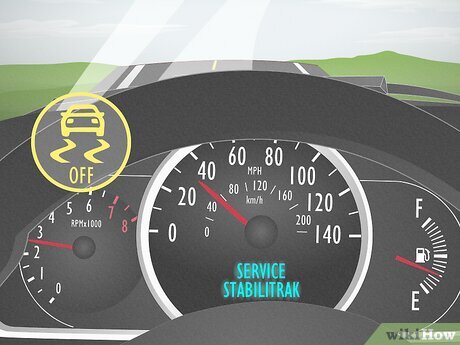
The Service StabiliTrak light is one of those dashboard warnings that can catch drivers off guard, appearing suddenly and leaving many wondering whether they can continue driving or need immediate assistance. This electronic stability control system is designed to keep your vehicle stable during challenging driving conditions, and when that warning light illuminates, it’s your car’s way of telling you that something needs attention. Understanding what triggers this light, what it means for your safety, and how to address the underlying issues can save you time, money, and potentially prevent dangerous situations on the road.
StabiliTrak is General Motors’ proprietary version of electronic stability control, a sophisticated safety system that has become standard equipment on modern vehicles. When the service stabilitrak light appears on your dashboard, it indicates that the system has detected a malfunction or that it has been temporarily disabled. Unlike some warning lights that can wait for your next scheduled maintenance, this particular alert deserves prompt attention because it directly affects your vehicle’s handling and safety capabilities, especially in adverse weather conditions or emergency maneuvers.
Understanding the StabiliTrak System and Its Critical Functions
The StabiliTrak system represents one of the most significant advances in automotive safety technology over the past two decades. This electronic stability control system constantly monitors your vehicle’s intended path versus its actual trajectory, making split-second adjustments to prevent loss of control. The system uses a network of sensors throughout your vehicle to gather data about wheel speed, steering angle, lateral acceleration, and yaw rate, processing this information dozens of times per second to determine if your vehicle is behaving as the driver intends.
When the StabiliTrak system detects a difference between where you’re steering and where the vehicle is actually going, it automatically applies individual brakes and may reduce engine power to bring the vehicle back in line with your intended direction. This intervention happens faster than any human driver could react, often preventing accidents before they develop. The service stabilitrak warning system works in conjunction with your anti-lock braking system (ABS) and traction control, creating a comprehensive safety network that has been proven to reduce single-vehicle crashes by approximately 40% according to the Insurance Institute for Highway Safety.
The technology behind StabiliTrak involves several key components working together seamlessly. The steering angle sensor tells the system where you want to go, while the yaw rate sensor measures how quickly the vehicle is rotating around its vertical axis. Wheel speed sensors at each corner monitor individual wheel rotation, and the lateral acceleration sensor detects sideways movement. All this data feeds into the electronic control module, which compares your inputs with the vehicle’s actual behavior and makes corrections when necessary. When any component in this complex system fails or sends incorrect data, the service stabilitrak indicator illuminates to alert you to the problem.
Common Causes That Trigger the Service StabiliTrak Light
The service stabilitrak light can illuminate for numerous reasons, ranging from minor sensor glitches to serious mechanical failures. Understanding these potential causes helps you determine the urgency of the situation and whether professional diagnosis is immediately necessary. One of the most frequent culprits is a faulty wheel speed sensor, which provides critical data about individual wheel rotation to the stability control system. These sensors are exposed to road debris, moisture, salt, and extreme temperatures, making them particularly vulnerable to failure. When a wheel speed sensor begins to malfunction, it sends incorrect information to the control module, triggering the warning light even though the actual mechanical components of your vehicle may be functioning perfectly.
Steering angle sensor problems represent another common cause of stabilitrak service light activation. This sensor, typically located in the steering column, tells the system where you intend to steer the vehicle. If it becomes misaligned or fails entirely, the StabiliTrak system cannot accurately compare your steering input with the vehicle’s actual path. This misalignment often occurs after wheel alignments, tire rotations, or any service involving the steering system if the sensor isn’t properly recalibrated. Some vehicle owners notice the light appearing immediately after such service, indicating that the technician may have forgotten this crucial calibration step.
Suggested read: Understanding the Department of the Treasury Bureau of the Fiscal Service: Your Complete Resource for Federal Financial Operations
Low battery voltage or electrical system issues frequently trigger stability control warnings across all vehicle makes and models. The StabiliTrak system requires consistent electrical power to function properly, and when battery voltage drops below optimal levels, the system may disable itself as a precaution. This explains why some drivers notice the service stabilitrak warning light appearing during cold weather when batteries are already stressed, or after the vehicle has been sitting unused for extended periods. Corroded battery terminals, failing alternators, or parasitic electrical drains can all contribute to voltage fluctuations that confuse the stability control system.
Additional causes include:
- ABS module failure – Since StabiliTrak shares components with the anti-lock braking system, ABS problems often trigger stability control warnings
- Faulty yaw rate sensor – This critical component measures vehicle rotation and is expensive to replace when it fails
- Damaged wiring or connectors – Road salt, moisture, and vibration can compromise the electrical connections between sensors and control modules
- Software glitches – Sometimes the control module simply needs a reset or software update to resolve false warnings
- Traction control system issues – Problems with traction control components can cascade into StabiliTrak warnings
- Brake system problems – Since StabiliTrak uses individual wheel braking for stability, brake system faults can disable the entire system
Diagnostic Procedures for Service StabiliTrak Problems
Proper diagnosis of service stabilitrak light issues requires specialized equipment and knowledge, though some preliminary checks can be performed by vehicle owners. The first step in any diagnostic procedure should be checking your vehicle’s diagnostic trouble codes using an OBD-II scanner. These standardized codes provide specific information about which sensor or component triggered the warning light, guiding technicians toward the source of the problem. Common codes associated with StabiliTrak problems include C0050 for right front wheel speed sensor circuit issues, C0045 for left front sensor problems, and C0710 for steering position sensor malfunctions.
Professional mechanics typically begin their diagnostic process by connecting a professional-grade scan tool that can read manufacturer-specific codes beyond the generic OBD-II standards. General Motors vehicles store detailed information about stability control system faults that consumer-grade scanners cannot access. These advanced scan tools can also perform live data monitoring, allowing technicians to observe sensor readings in real-time while the vehicle is stationary or during test drives. This capability helps identify intermittent problems that might not trigger a stored code but still cause the service stabilitrak message to appear periodically.
Visual inspection represents a critical component of the diagnostic process that shouldn’t be overlooked. Experienced technicians carefully examine wheel speed sensors for physical damage, check wiring harnesses for signs of chafing or corrosion, and verify that all electrical connectors are properly seated and free from moisture. They also inspect the steering angle sensor mounting to ensure it hasn’t been disturbed or damaged. Sometimes the solution is as simple as cleaning corrosion from a connector or replacing a damaged wire, saving hundreds of dollars compared to unnecessary component replacement.
After identifying the specific fault through code reading and inspection, technicians typically perform component testing to verify the diagnosis before replacing parts. Wheel speed sensors can be tested with a multimeter to check their resistance values against manufacturer specifications. The steering angle sensor should be monitored during wheel turning to ensure it provides smooth, accurate readings throughout its range of motion. The yaw rate sensor can be checked by comparing its output to actual vehicle movement during controlled maneuvers. This methodical approach prevents the frustrating and expensive practice of replacing parts based on guesswork.
Repair Options and Associated Costs for StabiliTrak Issues
The cost to repair service stabilitrak light problems varies dramatically depending on the underlying cause, ranging from essentially free software resets to expensive control module replacements exceeding $1,000. Understanding typical repair costs helps vehicle owners budget appropriately and recognize when quoted prices seem unreasonable. Wheel speed sensor replacement, one of the most common repairs, typically costs between $150 and $300 per sensor including parts and labor. The sensors themselves range from $40 to $100 depending on the vehicle model, with labor adding another $100 to $200 per sensor due to the time required to access components mounted near the wheel hubs.
Steering angle sensor recalibration often represents the most cost-effective solution when the service stabilitrak indicator appears after steering or alignment work. Many shops can perform this recalibration for $50 to $150, though some dealerships charge significantly more. The procedure typically takes 15 to 30 minutes and involves centering the steering wheel, then using a scan tool to reset the sensor’s zero point. Some vehicle owners successfully perform this procedure themselves using affordable bidirectional scan tools available online, though incorrect calibration can cause continued problems or even safety issues.
When the ABS control module fails, repair costs escalate quickly. New modules can cost $400 to $800 for the part alone, with labor adding another $100 to $300 depending on the module’s location and complexity of replacement. Some vehicles mount the module in easily accessible locations under the hood, while others hide it behind trim panels or under the vehicle where corrosion and moisture damage are more likely to occur. Rebuilt or remanufactured modules offer a more affordable alternative at $200 to $400, though warranty coverage varies by supplier and some mechanics prefer installing new components for critical safety systems.
| Repair Type | Parts Cost | Labor Cost | Total Cost Range |
|---|---|---|---|
| Wheel Speed Sensor | $40-$100 | $100-$200 | $150-$300 |
| Steering Angle Calibration | $0 | $50-$150 | $50-$150 |
| ABS Module Replacement | $400-$800 | $100-$300 | $500-$1,100 |
| Yaw Rate Sensor | $100-$300 | $100-$250 | $200-$550 |
| Wiring Repair | $20-$100 | $100-$400 | $120-$500 |
| Software Update | $0 | $0-$150 | $0-$150 |
Additional considerations affect repair costs beyond basic parts and labor. Dealership service departments typically charge 20% to 50% more than independent shops for the same repairs, though they have access to the latest technical service bulletins and manufacturer-specific diagnostic tools. Some service stabilitrak problems require multiple repair attempts before the root cause is identified, especially when dealing with intermittent electrical issues. Extended warranties or vehicle service contracts may cover stability control repairs depending on the specific terms and conditions, potentially saving owners hundreds of dollars on expensive component replacements.
Is It Safe to Drive With the Service StabiliTrak Light On?
The question of whether driving with an illuminated service stabilitrak light is safe doesn’t have a simple yes or no answer, as it depends on several factors including weather conditions, driving environment, and what other warning lights are present. When only the StabiliTrak light is illuminated and your vehicle is driving normally without any unusual noises, vibrations, or handling problems, you can generally continue driving to a repair facility under favorable conditions. The vehicle’s basic functions like steering, braking, and acceleration remain operational even when the stability control system is disabled, though you lose the additional safety margin that StabiliTrak provides during emergency maneuvers or slippery conditions.
However, driving without functional stability control significantly increases your risk during adverse weather or emergency situations. Studies have shown that electronic stability control prevents approximately 14,000 accidents annually in the United States alone, with the technology being particularly effective at preventing rollover crashes in SUVs and trucks. Without StabiliTrak active, your vehicle behaves like older models without electronic safety aids, requiring more driver skill and attention to maintain control during sudden maneuvers or on slippery surfaces. Prudent drivers should avoid highway speeds, aggressive lane changes, and any driving in rain, snow, or ice when the service stabilitrak warning is present.
The situation becomes more serious when the StabiliTrak light appears alongside other warning indicators. If you see the ABS light, traction control light, brake warning light, or check engine light simultaneously with the stabilitrak service message, the problem may be more severe and could affect your vehicle’s core safety systems. This combination of warnings sometimes indicates a serious electrical problem, brake system failure, or control module issue that requires immediate professional attention. In these cases, the safest course of action is to reduce your speed, drive cautiously to the nearest safe location, and arrange for towing to a repair facility rather than continuing to drive.
Some specific scenarios warrant immediate attention:
- Flashing StabiliTrak light during driving – This indicates the system is actively trying to stabilize the vehicle and suggests you’re at the limits of traction
- Light accompanied by unusual vehicle behavior – If steering feels different, brakes respond abnormally, or the vehicle pulls to one side, stop driving immediately
- Multiple warning lights – When StabiliTrak warnings appear with ABS, brake, or engine lights, the problem may be more serious than a simple sensor fault
- Light appears during bad weather – If the warning appears while driving in rain or snow, the system may have detected a serious problem right when you need it most
Preventive Maintenance to Avoid StabiliTrak Problems
Preventing service stabilitrak light issues requires maintaining the various components that support the stability control system, many of which serve multiple vehicle functions. Regular brake system maintenance forms the foundation of StabiliTrak reliability since the system depends on proper brake function to control individual wheels. This includes replacing brake fluid according to your vehicle’s maintenance schedule, typically every two to three years, as contaminated or moisture-laden brake fluid can damage the ABS hydraulic unit and associated sensors. Keeping brake pads and rotors in good condition prevents excessive heat buildup that can damage wheel speed sensors mounted near the braking components.
Wheel bearing maintenance also plays a crucial role in StabiliTrak system health because worn or damaged bearings affect the wheel speed sensor signals. When wheel bearings develop excessive play, they allow the sensor ring that the speed sensor reads to move away from its optimal position, potentially causing intermittent sensor readings that trigger the service stabilitrak warning light. Listen for humming or growling noises from the wheel area that increase with speed, and have wheel bearings inspected if you notice these symptoms. Addressing bearing problems early prevents the more expensive situation where the bearing fails completely and damages the wheel speed sensor in the process.
Suggested read: Kyrio Home Services: Your Complete Resource for Professional Home Solutions
Battery and electrical system maintenance deserves special attention for preventing stability control problems. Ensuring your battery maintains proper voltage through regular testing and timely replacement prevents the voltage fluctuations that confuse electronic control modules. Clean battery terminals and cable connections regularly to ensure optimal current flow, as even slight resistance in these connections can cause voltage drops that trigger false service stabilitrak messages. Consider having your vehicle’s charging system tested annually to verify that the alternator is maintaining proper voltage under various loads.
Protection from road salt and moisture helps prevent the corrosion that causes many stability control sensor failures. If you live in areas where road salt is used during winter, periodically wash the underside of your vehicle to remove salt buildup, paying particular attention to the wheel well areas where sensors are located. Some vehicle owners apply dielectric grease to electrical connectors during routine maintenance to create a moisture barrier that prevents corrosion. When having tires rotated or other undercarriage work performed, ask the technician to inspect the condition of wheel speed sensor wiring and connections, as catching corrosion early allows for simple cleaning rather than expensive replacement.
DIY Troubleshooting Steps Before Visiting a Mechanic
Before scheduling an appointment for service stabilitrak light diagnosis, vehicle owners can perform several simple checks that might resolve the problem or at least provide useful information for the repair technician. The first and easiest step is to check your vehicle’s battery voltage using an inexpensive multimeter or by having it tested for free at most auto parts stores. With the engine off, a healthy battery should read 12.4 to 12.6 volts, while a reading below 12.2 volts suggests the battery is discharged or failing. Start the engine and measure again; voltage should rise to 13.5 to 14.5 volts, indicating the alternator is charging properly. Low voltage can trigger false stabilitrak warning lights without any actual stability control system problems.
Inspecting tire pressure and condition represents another simple but often overlooked diagnostic step. Significant differences in tire pressure between wheels can confuse the wheel speed sensors because underinflated tires rotate at different speeds than properly inflated ones. Check all four tires with an accurate pressure gauge and inflate them to the specifications listed on the driver’s door jamb placard. Also examine tires for uneven wear patterns that might indicate alignment problems or suspension damage that could affect stability control operation. Replacing mismatched tires or those with significantly different tread depths sometimes resolves service stabilitrak issues without any mechanical repairs.
A simple power cycle can reset temporary software glitches that cause false warnings. Turn off the vehicle completely, remove the key from the ignition (or press the stop button and exit the vehicle if you have a keyless system), and wait at least three minutes before restarting. This allows control modules to fully shut down and clear temporary faults. Some vehicle owners disconnect the negative battery cable for five to ten minutes to perform a deeper reset, though this approach erases radio presets and may require relearning procedures for certain vehicle systems. If the service stabilitrak light doesn’t return after the reset, the problem was likely a temporary glitch rather than a hardware failure.
For those comfortable with basic automotive tools, visually inspecting wheel speed sensors and their wiring can identify obvious problems. Safely raise and support the vehicle following proper jack stand procedures, then examine each wheel speed sensor for physical damage, excessive dirt buildup, or loose mounting. The sensor should be positioned close to the tone ring (the toothed ring that the sensor reads) without touching it. Check the wiring harness for cuts, abrasions, or obvious damage, and ensure connectors are fully seated and free from corrosion. Simply cleaning a dirty sensor or reseating a loose connector occasionally resolves the problem without any parts replacement.
How Different GM Vehicle Models Experience StabiliTrak Issues
Service stabilitrak light problems affect various General Motors vehicle models differently, with some platforms showing distinct patterns of failure that owners should be aware of. Chevrolet Silverado and GMC Sierra trucks from the 2014 to 2018 model years have shown a higher incidence of steering angle sensor problems, often appearing after routine maintenance or tire rotations when the sensor wasn’t properly recalibrated. These full-size trucks also experience frequent issues with the yaw rate sensor, particularly in vehicles regularly used for towing or off-road driving where the sensor experiences more extreme inputs. Silverado owners report repair costs averaging $400 to $800 for yaw sensor replacement at dealerships.
Chevrolet Equinox and GMC Terrain models from the 2010 to 2017 generation face well-documented issues with wheel speed sensor failures, attributed partly to the sensors’ exposure to road debris and salt in the rear wheel wells. Owners of these crossovers often report the service stabilitrak warning appearing intermittently at first, becoming more frequent over time as sensor degradation progresses. The good news is that wheel speed sensor replacement is relatively straightforward on these models, with independent shops typically charging $200 to $300 per sensor. Some enterprising owners successfully replace these sensors themselves using online tutorials and basic hand tools.
Cadillac models including the SRX, ATS, and CTS have shown susceptibility to ABS module failures that trigger StabiliTrak warnings, often related to moisture intrusion into the module housing. These luxury vehicles sometimes have the module mounted in locations where road spray and salt accumulation cause premature corrosion. Cadillac service stabilitrak repairs involving module replacement typically cost more than repairs on Chevrolet or GMC models due to higher parts prices and dealership labor rates, though the actual repair procedures are often identical. Some Cadillac owners report success with having modules professionally repaired or rebuilt rather than replaced, saving $300 to $500 compared to new module installation.
Chevrolet Malibu sedans from the 2016 to 2019 model years have generated multiple technical service bulletins related to intermittent StabiliTrak warnings caused by software calibration issues rather than hardware failures. General Motors released software updates addressing these problems, which dealerships can install free of charge for vehicles still under the powertrain warranty or bumper-to-bumper coverage. Malibu owners experiencing stabilitrak service lights should inquire about applicable service bulletins before authorizing expensive sensor or module replacements that might not address the actual cause.
The Relationship Between StabiliTrak and Other Vehicle Systems
Understanding how the service stabilitrak system integrates with other vehicle technologies helps explain why problems sometimes cascade across multiple systems and why repairs can be complex. StabiliTrak shares sensors and control modules with the anti-lock braking system, making it impossible for one system to function without the other. The same wheel speed sensors that tell the ABS system when a wheel is about to lock during braking also provide the data StabiliTrak uses to detect when a wheel is slipping or the vehicle is beginning to skid. This integration explains why many vehicles display both ABS and StabiliTrak warning lights simultaneously when wheel speed sensor problems occur.
Traction control represents another system intimately connected with StabiliTrak, using the same hardware but focusing on preventing wheel spin during acceleration rather than stabilizing the vehicle during turning. When you see your traction control light illuminated along with the service stabilitrak warning, the problem likely affects components shared between both systems rather than being specific to stability control. Some General Motors vehicles allow drivers to manually disable traction control for situations like rocking the vehicle out of snow or mud, but StabiliTrak cannot be fully disabled on most models due to federal safety regulations requiring electronic stability control on all vehicles manufactured after 2011.
The relationship between StabiliTrak and the engine control system becomes apparent when you understand how the stability control system uses engine power reduction to regain vehicle control. When StabiliTrak detects an oversteer or understeer condition that braking alone cannot correct, it sends a signal to the engine control module requesting reduced power output. The engine computer responds by retarding ignition timing, reducing fuel delivery, or closing the electronic throttle to limit power until stability is restored. Problems with throttle position sensors or the electronic throttle control system can therefore trigger service stabilitrak lights even though the actual stability control components are functioning perfectly.
Modern General Motors vehicles increasingly integrate StabiliTrak with advanced driver assistance systems including lane departure warning, automatic emergency braking, and adaptive cruise control. These newer safety technologies rely on the same sensor data that StabiliTrak uses, plus additional inputs from cameras and radar. When the stability control system is disabled or malfunctioning, many of these advanced features automatically disable themselves as well since they depend on accurate vehicle dynamics data. This explains why some drivers notice multiple safety system warnings appearing simultaneously when a single service stabilitrak sensor fails.
Real-World Owner Experiences and Case Studies
Examining real-world cases of service stabilitrak light problems provides valuable insights into how issues develop and how different repair approaches work in practice. One 2015 Chevrolet Traverse owner reported the warning light appearing intermittently for several weeks, primarily during wet weather or shortly after driving through puddles. The vehicle drove normally otherwise, leading the owner to delay diagnosis. Eventually the light remained illuminated constantly, and professional diagnosis revealed a corroded connector on the left rear wheel speed sensor. The repair cost $180 for connector replacement and sensor cleaning, but the technician noted that waiting longer might have required full sensor replacement at double the cost. This case illustrates how small problems can escalate when ignored.
A 2017 GMC Acadia owner experienced a different scenario where the service stabilitrak message appeared immediately after having tires rotated at a national chain tire shop. The vehicle’s stability control and traction control systems were completely disabled, and the steering felt slightly different than before the service. After returning to the tire shop and explaining the problem, a manager acknowledged that the technician had failed to perform the required steering angle sensor recalibration after the tire work. The shop recalibrated the sensor at no charge, immediately resolving all warning lights. This experience highlights the importance of choosing service providers familiar with the calibration requirements of modern vehicle safety systems.
Suggested read: Schools Advisory Service Login: Your Complete Access Guide to Educational Support Platforms
Another instructive case involved a 2016 Chevrolet Silverado where the owner noticed the stabilitrak warning light appearing during cold weather, disappearing after the vehicle warmed up. This pattern continued for months before the owner finally took the truck to a dealership for diagnosis. Testing revealed that the battery was weak, showing low voltage during cold starts that caused the stability control system to temporarily disable itself until voltage recovered. A new battery completely resolved the problem at a cost of $180, far less than the sensor or module replacement the owner had feared. This case demonstrates the value of considering simple electrical issues before assuming expensive component failures.
A particularly challenging situation occurred with a 2014 Cadillac SRX that displayed the service stabilitrak light along with multiple other warnings after the owner drove through deep water during heavy rain. Initial diagnosis at an independent shop suggested a failed ABS module requiring $900 in repairs. The owner sought a second opinion from a shop specializing in electrical diagnostics, where technicians discovered water intrusion in the ABS module connector rather than actual module failure. After cleaning and sealing the connector and thoroughly drying the harness, all systems functioned normally. The repair cost $250 rather than $900, illustrating how thorough diagnostic work can prevent unnecessary expensive repairs.
Technical Service Bulletins and Known Issues
General Motors has issued numerous technical service bulletins addressing specific service stabilitrak light problems across various model years and platforms, and awareness of these bulletins can save owners from unnecessary repairs or expenses. TSB 19-NA-206 addresses intermittent StabiliTrak warnings on 2019 model year Chevrolet Silverado and GMC Sierra 1500 trucks, identifying a software calibration issue in the electronic brake control module. The bulletin instructs dealers to reprogram the module with updated software, a procedure that takes approximately 30 minutes and is covered under the vehicle’s warranty. Owners experiencing these symptoms should reference this bulletin when seeking service.
Another significant bulletin, TSB 16-NA-206, covers 2016-2017 Chevrolet Malibu vehicles displaying service stabilitrak messages along with “Engine Power Reduced” warnings. This issue stems from a software conflict between the engine control module and stability control system during certain driving conditions. The fix involves reprogramming both control modules with coordinated software updates. Some owners report dealerships initially attempting expensive sensor replacements before discovering the applicable service bulletin, emphasizing the value of researching known issues before authorizing repairs.
TSB 18-BR-008 addresses a unique problem affecting certain 2018 Chevrolet Equinox and GMC Terrain models where the service stabilitrak warning appears accompanied by a grinding noise from the ABS unit during low-speed stops. Investigation revealed that the brake system’s electronic calibration was overly sensitive, causing the ABS to activate unnecessarily and confuse the stability control system. The solution requires software recalibration of the electronic brake control module and typically resolves all symptoms without any parts replacement. This bulletin illustrates how sophisticated modern brake and stability systems can develop problems that wouldn’t occur in simpler mechanical systems.
General Motors issued TSB 15-04-21-001 covering multiple 2014-2015 model year vehicles including Silverado, Sierra, Tahoe, Yukon, and Suburban models experiencing stabilitrak service light illumination caused by electromagnetic interference from aftermarket LED headlight bulbs. The bulletin explains that poorly designed LED conversion kits can generate radio frequency interference that disrupts communication between stability control sensors and the control module. The recommended fix is removing the aftermarket bulbs and installing either OEM bulbs or properly filtered LED units. This unusual case shows how seemingly unrelated modifications can affect complex electronic systems.
The Evolution of StabiliTrak Technology Across GM Generations
The service stabilitrak system has evolved significantly since General Motors first introduced the technology in the late 1990s, with each generation bringing improved performance and reliability alongside new potential failure modes. Early StabiliTrak systems used simple yaw rate sensors and basic control algorithms that provided effective but somewhat intrusive intervention during loss-of-traction events. Drivers often complained about aggressive power cuts and brake applications that felt rough compared to modern systems. These first-generation systems also suffered from limited diagnostic capabilities, making troubleshooting difficult when problems occurred and often leading to expensive trial-and-error repairs.
The second generation of StabiliTrak technology, introduced around 2007, brought integrated traction control and more sophisticated sensor fusion algorithms that combined data from additional sensors for smoother, less intrusive operation. These improved systems could differentiate between intentional spirited driving and actual loss of control, intervening only when necessary to maintain safety. However, the additional complexity introduced new failure modes, particularly related to the steering angle sensor which became a critical input for the enhanced algorithms. Service stabilitrak light problems related to steering sensors became much more common during this era, especially following tire service or alignment work that disturbed the sensor calibration.
Current-generation StabiliTrak systems, found in vehicles from approximately 2014 onward, integrate with advanced driver assistance features including lane keeping assist, automatic emergency braking, and adaptive cruise control. These modern systems use data from cameras, radar, and GPS in addition to traditional stability control sensors, creating unprecedented capabilities but also new complexity. When the service stabilitrak warning appears on these newer vehicles, the problem might involve sensors or systems that didn’t exist in earlier generations. On the positive side, modern systems include extensive self-diagnostic capabilities that store detailed fault information, making professional diagnosis more accurate and efficient.
Looking toward the future, General Motors continues evolving stability control technology as part of the broader development of autonomous and semi-autonomous driving systems. The company’s Super Cruise hands-free driving system builds upon the foundation of StabiliTrak sensors and control logic, adding layers of additional capability. As these systems become more common, the traditional service stabilitrak light may be supplemented or replaced by more specific warnings that identify exactly which sensor or system requires attention, potentially simplifying diagnosis and repair.
Comparing StabiliTrak to Competitors’ Stability Control Systems
While service stabilitrak light problems are specific to General Motors vehicles, understanding how StabiliTrak compares to competitors’ electronic stability control systems provides useful context for owners and highlights whether GM’s approach is more or less reliable than alternatives. Toyota’s Vehicle Stability Control system uses a similar technical approach with wheel speed sensors, yaw rate sensors, and steering angle sensors feeding data to a central control module. However, Toyota typically mounts these sensors in more protected locations and uses more conservative calibrations that prioritize long-term reliability over maximum performance. Toyota VSC systems generally show lower failure rates than GM’s StabiliTrak, though they’re also sometimes criticized for overly cautious interventions.
Ford’s AdvanceTrac stability control system shares many characteristics with StabiliTrak, including integration with traction control and anti-lock braking systems. Ford vehicles from similar model years show comparable rates of stability control warning lights appearing, with wheel speed sensors and steering angle sensors being common failure points across both brands. One notable difference is that Ford provides easier access to certain sensors on some models, potentially reducing labor costs for repairs. Ford’s diagnostic software also includes more detailed testing capabilities that can help technicians identify intermittent problems more quickly than GM’s systems.
Honda’s Vehicle Stability Assist and Volkswagen’s Electronic Stability Program take slightly different approaches to sensor mounting and calibration, each with their own strengths and weaknesses. Honda systems tend to be very reliable but can be expensive to repair when they do fail, as the company often packages multiple sensors and the control module together requiring replacement as a unit. Volkswagen systems are sophisticated and effective but have shown vulnerability to electrical problems in some model years, with stability control warnings sometimes indicating broader electrical system issues rather than specific sensor failures.
The performance and reliability of any stability control system depends heavily on proper maintenance and operating conditions. General Motors’ StabiliTrak compares favorably to competitors when vehicles are properly maintained and sensors are calibrated correctly following service. The system’s integration with other vehicle technologies is competitive with industry standards, and repair costs for common failures like wheel speed sensors are comparable across brands. Where StabiliTrak sometimes falls short is in the complexity of certain repairs and the need for dealer-specific diagnostic equipment to access all system functions, potentially limiting repair options for owners.
Understanding the Legal and Safety Implications
The service stabilitrak light carries legal and safety implications that vehicle owners should understand, particularly regarding vehicle inspection requirements and potential liability in the event of an accident. Many U.S. states have incorporated electronic stability control functionality into their vehicle safety inspection programs, meaning a vehicle with an illuminated StabiliTrak warning might fail inspection and cannot be legally registered until repaired. State requirements vary widely, with some checking only for the presence of warning lights while others perform functional tests of the stability control system. Vehicle owners facing registration renewal should address StabiliTrak problems promptly to avoid inspection failures that delay registration.
Federal Motor Vehicle Safety Standard 126 requires all passenger vehicles manufactured after September 2011 to include functional electronic stability control as standard equipment. This regulation reflects the technology’s proven effectiveness at preventing accidents, particularly single-vehicle crashes and rollovers. When a service stabilitrak warning indicates that this federally mandated safety system is not functioning, the vehicle technically doesn’t meet the safety standards it was certified to comply with. While this doesn’t make the vehicle illegal to operate, it does mean you’re driving without a critical safety feature that regulators consider essential for modern vehicles.
Suggested read: Water Heater Flush Service: Everything You Need to Know to Extend Your Unit's Lifespan
Insurance implications represent another consideration when driving with stability control problems. While insurance companies typically cannot deny claims solely because the StabiliTrak system wasn’t functioning at the time of an accident, an illuminated service stabilitrak light could become relevant in accident investigations, particularly in cases involving loss of vehicle control. If an accident investigation reveals that a properly functioning stability control system might have prevented the crash, and the owner knew the system was disabled, this could affect liability determinations or settlement negotiations. Maintaining vehicle safety systems in good working order protects both your physical safety and your legal interests.
For commercial vehicle operators and fleet managers, service stabilitrak problems carry additional implications related to duty of care and corporate liability. Fleet vehicles with known safety system malfunctions create potential liability exposure if drivers are involved in accidents, especially accidents that might have been prevented by functional stability control. Many fleet management companies implement policies requiring immediate removal from service of any vehicle displaying stability control warnings, recognizing that the modest cost of repairs pales in comparison to the potential costs of accidents and liability claims.
Aftermarket Solutions and Alternative Repair Options
Vehicle owners dealing with service stabilitrak light issues have several options beyond traditional dealership or independent shop repairs, each with distinct advantages and potential drawbacks. Mobile automotive diagnostics services have emerged as a convenient alternative for initial troubleshooting, with technicians coming to your home or workplace to scan trouble codes and perform basic diagnostics. These services typically charge $75 to $150 for diagnostic visits and can identify simple problems like low battery voltage or loose connections that you can potentially repair yourself. For more complex issues requiring specialized equipment or parts replacement, the mobile technician can provide you with specific information to take to a traditional repair facility.
Remanufactured or rebuilt control modules offer significant cost savings compared to new dealer parts when ABS module or StabiliTrak control module replacement is necessary. Reputable rebuilders disassemble failed modules, replace common failure points like capacitors and sensors, test functionality, and warranty their work for one to three years. Quality remanufactured modules can cost 40% to 60% less than new ones while providing comparable reliability. When considering this option for service stabilitrak repairs, research the rebuilder’s reputation through reviews and verify their warranty terms, as quality varies significantly in the remanufacturing industry.
Do-it-yourself repair represents another option for mechanically inclined owners with appropriate tools and diagnostic equipment. Modern bidirectional scan tools capable of performing steering angle sensor recalibration and reading manufacturer-specific trouble codes are now available to consumers for $200 to $600, a worthwhile investment for owners of multiple vehicles or those planning to keep their vehicle long-term. Online forums dedicated to specific GM models provide detailed repair procedures and troubleshooting guidance for common service stabilitrak light problems, including step-by-step instructions with photos. However, DIY stability control repairs require caution, as mistakes can create safety hazards or cause additional damage.
Some owners explore disabling the service stabilitrak warning light through programming rather than repairing the underlying problem, particularly when faced with expensive quotes for non-critical sensor replacements. This approach is strongly discouraged as it eliminates the warning system’s safety function without restoring stability control functionality. Deliberately disabling safety system warnings could also create liability issues in the event of an accident and might violate state vehicle safety inspection requirements. The proper solution is always to diagnose and repair the actual problem rather than simply silencing the warning.
For those interested in exploring community resources and other automotive services, d&s community services offers additional guidance on vehicle maintenance and repair topics that can complement your understanding of complex automotive systems.
Frequently Asked Questions About Service StabiliTrak Light
What does it mean when the service StabiliTrak light comes on?
When the service stabilitrak light illuminates on your dashboard, it indicates that your vehicle’s electronic stability control system has detected a malfunction or has been temporarily disabled. The system uses sensors throughout your vehicle to monitor wheel speed, steering angle, and vehicle rotation, and when it detects problems with these sensors or the control module, it triggers the warning light. This light serves as an alert that the stability control system may not function properly during emergency maneuvers or slippery conditions, meaning you’ve lost an important safety feature designed to prevent loss of vehicle control.
Can I drive my car with the service StabiliTrak light on?
You can typically drive with the service stabilitrak warning light illuminated when conditions are favorable and the vehicle is operating normally otherwise, but you should limit your driving and schedule repairs promptly. The vehicle’s basic functions like steering, braking, and acceleration remain operational, but you’ve lost the electronic stability assistance that helps prevent skids and loss of control. Avoid driving in adverse weather conditions, at highway speeds, or in situations requiring aggressive maneuvers when this warning is present. If the light appears alongside other warnings like ABS or brake system lights, or if you notice unusual vehicle behavior, stop driving and seek professional assistance immediately.
How much does it cost to fix a service StabiliTrak problem?
The cost to repair service stabilitrak light issues varies significantly depending on the underlying cause, ranging from free software updates to over $1,000 for control module replacement. Common repairs include wheel speed sensor replacement at $150 to $300 per sensor, steering angle sensor recalibration at $50 to $150, and ABS control module replacement at $500 to $1,100. Many problems can be resolved with simple diagnostics and minor repairs, so it’s important to have the system properly diagnosed before authorizing expensive component replacements. Getting multiple quotes and understanding exactly what components need replacement can help you avoid unnecessary repairs and expense.
What causes the service StabiliTrak light to come on?
Multiple factors can trigger the service stabilitrak light, with wheel speed sensor failures being the most common cause. These sensors monitor individual wheel rotation and are vulnerable to damage from road debris, moisture, and corrosion. Other frequent causes include steering angle sensor misalignment after tire service or alignments, low battery voltage or electrical system problems, ABS control module failures, damaged wiring or connectors, and software glitches requiring updates. The yaw rate sensor that measures vehicle rotation can also fail, particularly in vehicles used for towing or off-road driving. Proper diagnosis using a professional scan tool is essential to identify the specific cause.
Will the service StabiliTrak light reset itself?
Suggested read: Munis Self Service: Your Complete Resource for Employee and Citizen Portal Access
The service stabilitrak warning light may turn off on its own if the problem was a temporary glitch or intermittent electrical issue, but it will return if the underlying problem persists. Some vehicles will automatically turn off the warning light after a certain number of drive cycles without detecting the fault again, but this doesn’t mean the problem is fixed, only that it hasn’t recurred recently. Attempting to clear the light by disconnecting the battery provides only temporary relief if the actual problem hasn’t been repaired, as the light will reilluminate once the system detects the fault again. The proper approach is to diagnose and repair the actual cause rather than hoping the warning will disappear.
Is service StabiliTrak covered under warranty?
Coverage for service stabilitrak repairs depends on your vehicle’s warranty status and the specific cause of the problem. New vehicles typically include comprehensive warranty coverage for three years or 36,000 miles that covers stability control system defects, while the powertrain warranty extending to five years or 60,000 miles may cover certain components like control modules. Software updates and recalibrations required due to manufacturing defects are usually covered regardless of mileage if technical service bulletins address the issue. However, problems caused by normal wear, corrosion, impact damage, or lack of maintenance are generally not covered even within the warranty period. Extended warranties or vehicle service contracts may provide coverage beyond the factory warranty depending on their specific terms.
Can bad wheel bearings cause the service StabiliTrak light?
Yes, worn or damaged wheel bearings can definitely trigger the service stabilitrak light because they affect the wheel speed sensor signals that the stability control system relies on. When wheel bearings develop excessive play or movement, they allow the sensor tone ring to move away from its optimal position relative to the wheel speed sensor, causing intermittent or inaccurate readings. The stability control system interprets these inconsistent signals as a sensor malfunction and illuminates the warning light. If you’re experiencing a stabilitrak warning along with humming or growling noises that increase with vehicle speed, failed wheel bearings are a likely cause. Replacing worn bearings typically resolves both the noise and the stability control warning.
Take Action Now: Don’t Ignore Your Service StabiliTrak Light
If you’re experiencing a service stabilitrak light warning on your GM vehicle, don’t delay in getting it diagnosed and repaired. While it may be tempting to continue driving when the vehicle seems to operate normally, you’re sacrificing a critical safety system designed to prevent accidents. Schedule an appointment with a qualified technician who can properly diagnose the issue using professional scan tools and repair it correctly the first time. Whether the solution is a simple sensor recalibration or a more involved component replacement, addressing the problem promptly protects both your safety and your vehicle’s value while potentially preventing more expensive repairs down the road.